
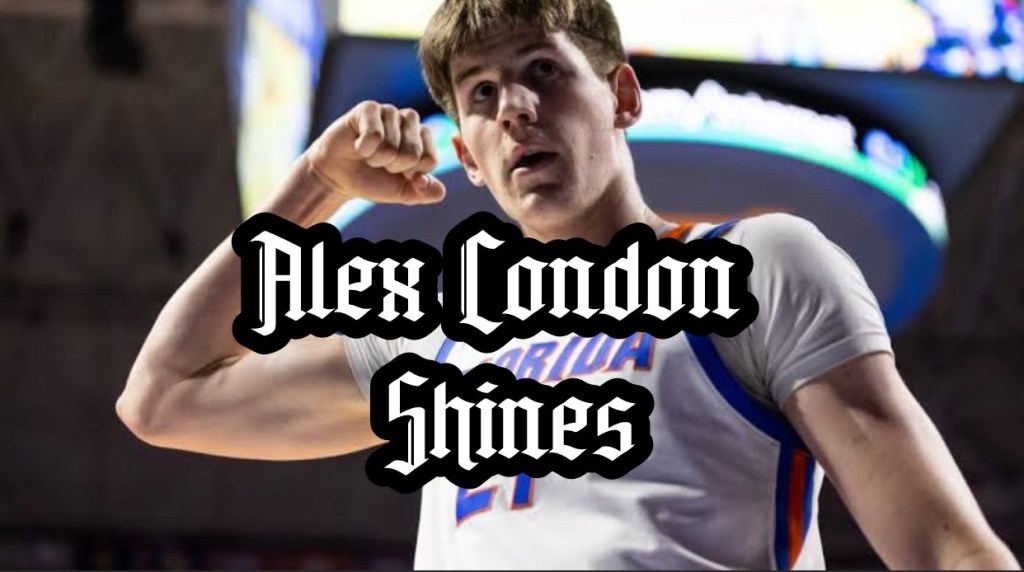
Florida vs. Alabama: Condon Shines, 2025 NBA Draft Prospects Breakdown
This high-paced, intense matchup featured three prospects tied to the 2025 NBA Draft: Alex Condon and Walter Clayton Jr. from Florida, and Labaron Philon from Alabama. Let’s break down each player’s performance.
Alex Condon
Statline: 27 PTS, 10 REB, 1 AST, 2 BLK, 1 TO
Condon made a strong impact on the offensive end, showcasing his ability to finish plays, particularly through lobs and finishes over defenders. He had multiple highlight-worthy finishes at the rim and displayed a promising shooting touch, knocking down a couple of threes—something that will make him even more intriguing to NBA teams. Condon’s motor stood out, as he consistently played with high energy and excelled at running the floor.
Defensively, Condon was a force around the rim, protecting the paint and battling on the glass. His most impressive play was a huge block on an alley-oop attempt, and he also recorded a block on Philon as he attacked the basket. Even when he wasn’t blocking shots, Condon was contesting effectively and fighting for rebounds.
Overall Takeaway: Condon was highly impressive. His relentless energy is his defining trait—he plays at full speed for the entire game. He has the tools to protect the rim, finish lobs, and pass well, and if he continues to develop as a three-point shooter, he could find himself in the lottery of the upcoming draft.
Walter Clayton Jr.
Statline: 22 PTS, 8 AST, 5 REB, 1 BLK, 1 TO
Clayton had a strong offensive performance, proving to be a solid playmaker who consistently made the right reads. He moved well off the ball, cutting backdoor for easy baskets off passes from Condon, and demonstrated the ability to score at all three levels. His chemistry with Condon was evident. One of his most impressive plays was a tough basket across the lane, finishing off the same foot. He also hit a key pull-up three in the second half.
Defensively, Clayton is a fierce competitor despite lacking ideal size. He never gives up on plays, which was evident when he blocked a three-point attempt by Sears.
Overall Takeaway: Clayton played well, though he made a couple of questionable decisions that left me scratching my head. He has great vision, a reliable mid-range game that complements his deep shooting, and a competitive edge. However, as a senior, his draft stock is uncertain—he could be a late second-round pick or go undrafted.
Labaron Philon
Statline: 19 PTS, 5 REB, 4 AST, 1 STL, 1 TO
Philon showcased impressive shot-making ability, especially from beyond the arc. What stood out the most was his poise—he never allowed the defense to speed him up, a rare trait for a freshman. His ability to control his tempo and dictate pace was eye-catching. While he could have forced the issue at times, he remained disciplined, which was a positive sign. He also showed the ability to break down defenses and finish tough shots in the lane.
Defensively, Philon played tough, contested well, and stayed engaged. His most notable defensive play came when he jumped a passing lane to intercept a steal, preventing Florida from pushing in transition. This play highlighted his defensive IQ and anticipation.
Overall Takeaway: Philon is an intriguing prospect. This was my first time watching him, so I need to see more before fully assessing his draft stock. However, based on this performance, I’d project him as a late first- to second-round pick. His composure, shot-making, and defensive effort will boost his value as he continues to develop.
Honorable Mentions – Thomas Haugh* and Mark Sears
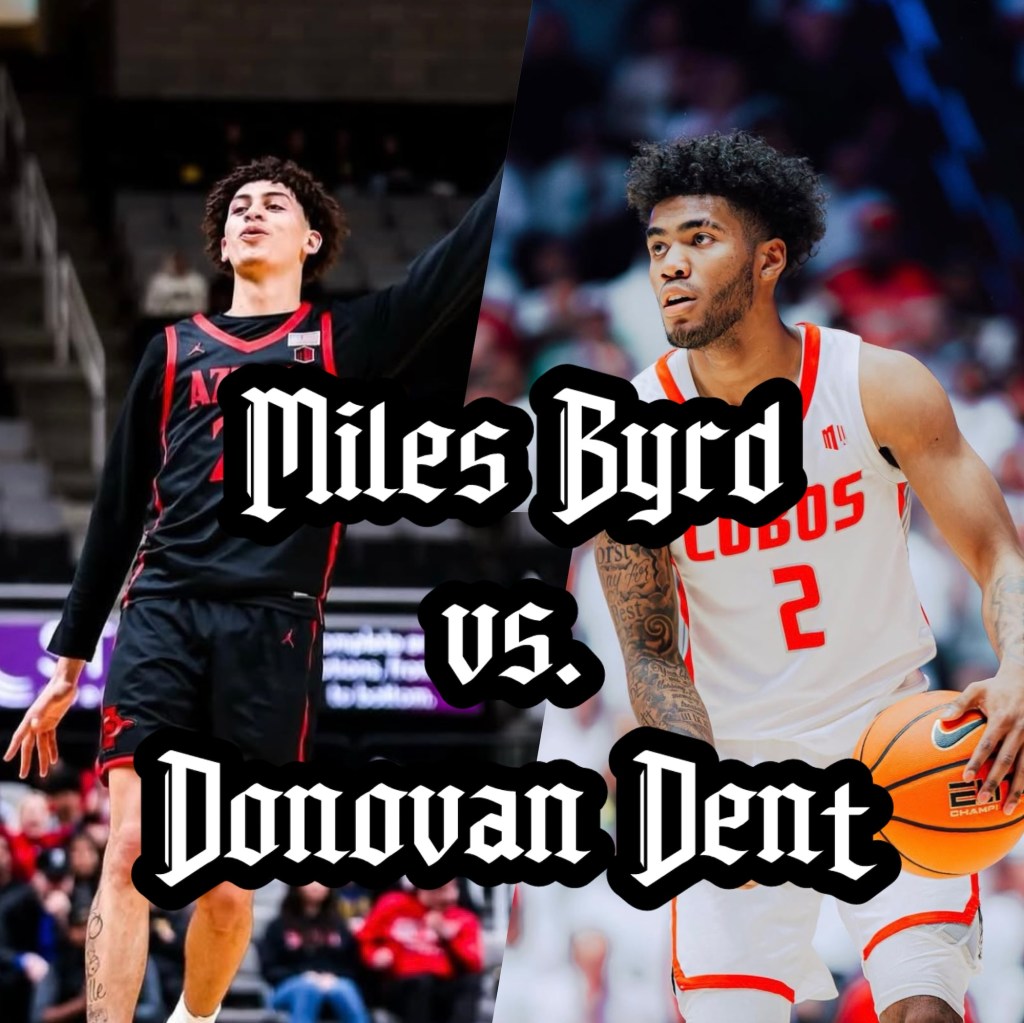
Scouting Report: Miles Byrd vs. Donovan Dent
Miles Byrd (San Diego State)
Statline: 13 PTS, 9 REB, 3 AST, 3 STL, 1 BLK
Byrd showcased his two-way impact, contributing across the board with scoring, rebounding, and defensive activity. He flashed his athleticism with a big-time alley-oop and-one in transition, finishing through contact.
Defensively, he was disruptive, registering multiple deflections, steals, and a strong help-side block that led to a transition three on the other end—a standout sequence that highlighted his ability to impact both sides of the floor.
Byrd’s effort on the glass stood out, as he consistently fought for loose balls, secured key rebounds, and showed great activity in contested situations. He also hit a timely shot, including a big off-the-dribble three to put SDSU up eight late in the game.
His playmaking was solid, delivering well-placed passes out of the pick-and-roll and in transition, though there were a couple of rushed decisions that resulted in turnovers. While he didn’t create much off the dribble, his ability to make winning plays, defend, and impact the game with his energy and effort was evident throughout.
Final Take: Byrd’s defensive instincts, rebounding, and ability to make hustle plays were key factors in SDSU’s success. His spot-up shooting, transition play, and his extra effort plays make him a valuable contributor, and if he can grow offensively, he’ll be an even bigger asset moving forward.
Donovan Dent (New Mexico)
Statline: 26 PTS, 7 AST, 0 REB
Dent controlled the tempo for New Mexico, displaying clear floor general qualities with sharp passing and poise. His CP3-like feel for the game was evident in his ability to break down the defense, hitting teammates for open threes and interior buckets. His tough fadeaway drives and high-level finishes through contact stood out, including an impressive and-one finish after absorbing two bumps mid-air.
Dent was an assertive scorer, constantly looking for his own shot while still keeping teammates involved. He displayed real three-point ability off the bounce, hitting multiple big-time off-the-dribble threes, including one to cut the lead to five and another step-back triple to keep New Mexico in striking distance. His ability to manipulate defenders off the dribble was elite—he made an insane move on Byrd to get a tough bucket at the rim and consistently found his bigs in tight windows.
His defense was inconsistent—he had a chase-down block on Byrd but also got caught in between assignments, leading to open shots. His body language felt too relaxed at times, which could be mistaken for disengagement. However, when locked in, he was a dynamic shot-maker and playmaker, keeping pressure on the defense with his scoring and passing.
Final Take: Dent’s playmaking, shot creation, and ability to score off the dribble were high-level. He was an aggressive scorer who could get his own shot and create for others, but he needs to maintain a consistent defensive focus and fully engage throughout the game. Dent needs to also improve on his catch and shoot three point opportunities.
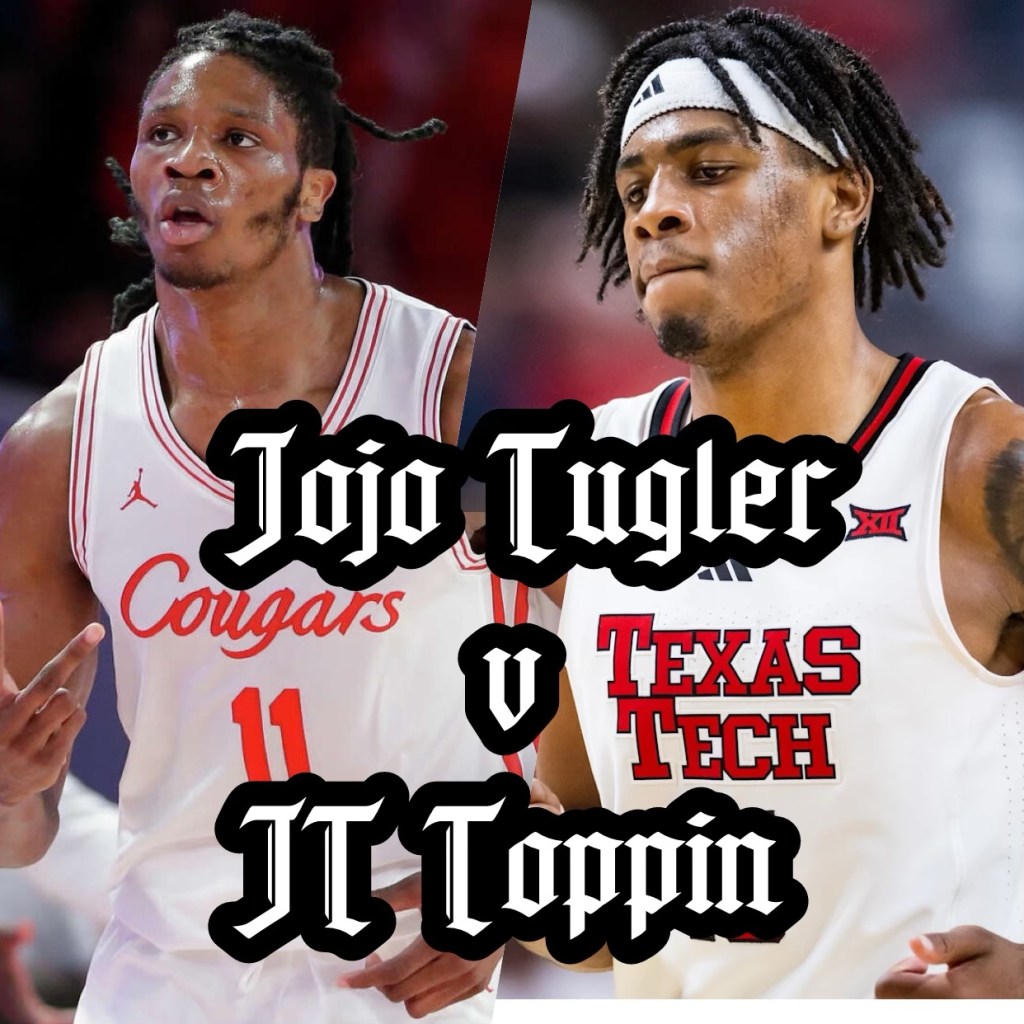
Houston defeated Texas Tech, and we got to witness a battle between two big men: Jojo Tugler and JT Toppin. Let’s break it down.
Tugler came out aggressive, attacking Toppin and scoring in the paint with a nice touch. He favors quick floaters around the rim. On defense, Tugler was physical with Toppin, Tugler also caused a deflection that led to a steal. However, Tugler did look a little shaky when handling the ball, especially when trying to create plays.
Toppin struggled early, particularly from beyond the arc. Both of his three-point attempts were catch-and-shoot opportunities, but he couldn’t convert. Toppin is more comfortable attacking the paint off the dribble. He used a rip-through move out of a triple-threat stance and got to the basket for a floater. Toppin also made some solid passes with his back to the basket, though his passing isn’t his strongest suit. What really stood out was his ability to defend in pick-and-roll situations—he did a great job getting out on guards and recovering to his man.
In the second half, Tugler continued to showcase his hook shot to score. He also finished with a huge two-footed poster dunk. What impressed me most about Tugler was his defensive activity. During a Houston defensive collapse, Tugler blocked Toppin’s shot. Later, he dove on the floor for a loose ball—two plays that really caught my attention.
Toppin faced more doubles in the second half, which forced him to give up the ball. Despite being limited offensively, he showed strong defensive hands, including a help-side block. However, he made a poor pass out of a double team that resulted in a turnover, contributing to a rough night for Texas Tech.
Overall, I believe Tugler can be an impact player who does the “little things” for a contender team. These might seem small, but they are incredibly valuable when it comes to winning. Tugler did struggle with fouls in this game, and there was one moment I didn’t like: after fouling out, his coach was visibly frustrated with him, and Tugler seemed to take issue with it. No one wants to be yelled at, but the coach’s frustration came from wanting the best for Tugler—his presence on the floor is important.
As for Toppin, he’s not a strong rim protector, and although he plays center for Texas Tech, he’s really more of a wing. For Toppin to be impactful at the next level, he will need to improve his offensive game, particularly his ball handling and shooting. He went 0-3 from beyond the arc and didn’t show much of a mid-range game. Toppin’s strongest assets are his rebounding and finishing around the rim.
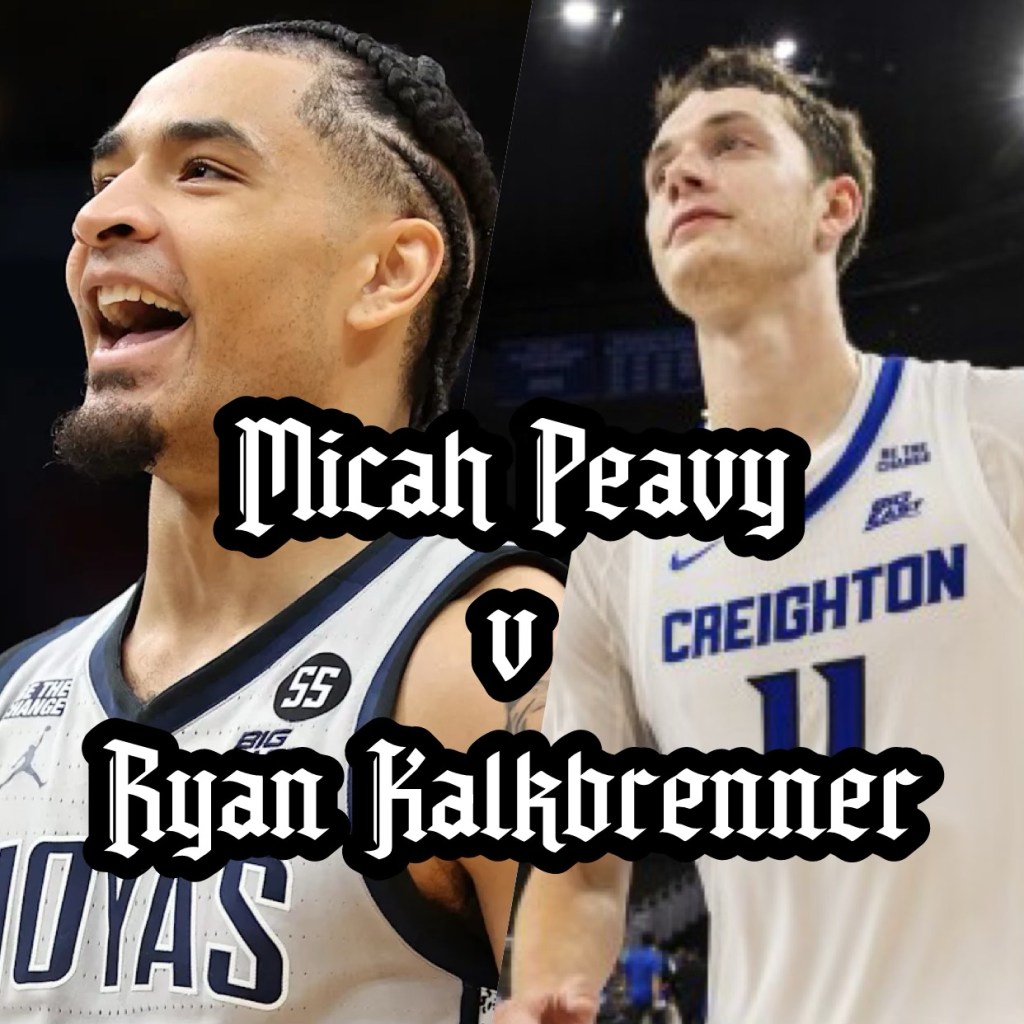
At the start of this game, it looked like Georgetown might pull off the win. However, things unraveled for the Hoyas in the second half, and Creighton secured an 80-69 victory. This matchup featured two NBA prospects—Georgetown’s Micah Peavy and Creighton’s Ryan Kalkbrenner. Let’s break down their performances.
In the first half, Peavy came out scorching hot, knocking down shots from all levels—threes, mid-range jumpers, and finishes at the rim. As usual, his defensive prowess was on full display. He picked off a lazy pass from Kalkbrenner and took it the other way for a dunk. He also chased Steven Ashworth around screens and blocked his shot, effectively shutting him down whenever he defended him. Offensively, I really liked Peavy’s decisiveness—he was efficient with the ball, using minimal dribbles to get to his spots.
Kalkbrenner, on the other hand, had a quiet first half but made his presence felt defensively. Peavy tested him multiple times at the rim, but Kalkbrenner consistently won those battles—including one play where Peavy tried to put him on a poster but got denied. Offensively, Kalkbrenner flashed solid footwork under the basket for a score and made a nice pass out of the post for a hockey assist.
In the second half, Peavy went ice cold. Even when he got clean looks, his shots just wouldn’t fall. However, I loved his resilience—he kept battling, even challenging the 7-footer in the paint. Despite his struggles offensively, he remained locked in on defense, coming up with a steal and setting up a teammate for a crucial bucket to cut the lead to five. Two plays stood out—Peavy missed a wide-open three, and you could tell he was in his head. But on a future possession, he attacked the rim with force and converted an and-one. He needs to be that aggressive every time.
Kalkbrenner and Creighton took over in the second half. With Sorber out, Georgetown didn’t have the size to match up with him, and he dominated inside. He set solid screens, controlled the paint, and continued blocking shots. Peavy tried testing him again but got sent away. Kalkbrenner did what was expected—he impacted both ends by simply being the biggest player on the floor. However, he struggled from three, and I’ll need to watch him more to assess his shooting ability.
Overall, Peavy is an underrated prospect who should get more recognition as a player who can contribute to contending teams. At 6’8″, he defines the 3&D role. While he’ll be 24 years old, his game reminds me of Nique Clifford—though Clifford is the better passer. I also would’ve liked to see Peavy get to the free-throw line more, especially since he struggled in the second half—he only attempted one free throw. As always, I’ll continue assessing these young prospects.
As for Kalkbrenner, it’s hard to take too much from this performance given Georgetown’s lack of size. He did what was expected—used his size to dominate on both ends. However, the speed of the game could be a concern, as it often is for bigs. Will he struggle with fatigue? Can he defend in space? Those are aspects I’ll be watching closely moving forward.

This game was a real joy to watch. Michigan State secured a 75-62 victory over Michigan, and I tuned in to evaluate Danny Wolf. But before we dive into Wolf’s game—Jase Richardson is an absolute bucket. If you haven’t watched him play yet, you should. Now, let’s break down Wolf’s performance.
For a 7-footer, Wolf’s skill set is extremely impressive. He’s comfortable handling the ball and is a highly talented passer. He can also knock down the three. A few plays in the first half stood out to me. The first was a transition bucket where he euro-stepped for the finish, which could have easily been an and-one. Then, he executed a smooth through-the-legs dribble into his shooting pocket for a three. Lastly, he made a beautiful behind-the-back pass in transition, setting up a teammate for an and-one. Wolf also displayed great chemistry with fellow 7-footer Vladislav Goldin throughout the game.
In the second half, Wolf struggled offensively but continued making plays for his teammates. He facilitated high-low action with Goldin and created open looks for shooters. One of the first things you notice about Wolf is his playmaking ability and high basketball IQ. A play I particularly enjoyed was when he dove on the floor to tap the ball forward, sparking a fast break for his team.
Overall, Wolf is a highly skilled offensive player. Defensively, he competes, but he’s not a standout defender. He’s a unique prospect, and it’ll be interesting to see where he lands and how he’s utilized. I’d love to see him with the Spurs—he gives me Boris Diaw vibes—but I don’t quite see San Antonio going in that direction. In the right hands, though, I believe Wolf could be a valuable and versatile piece.
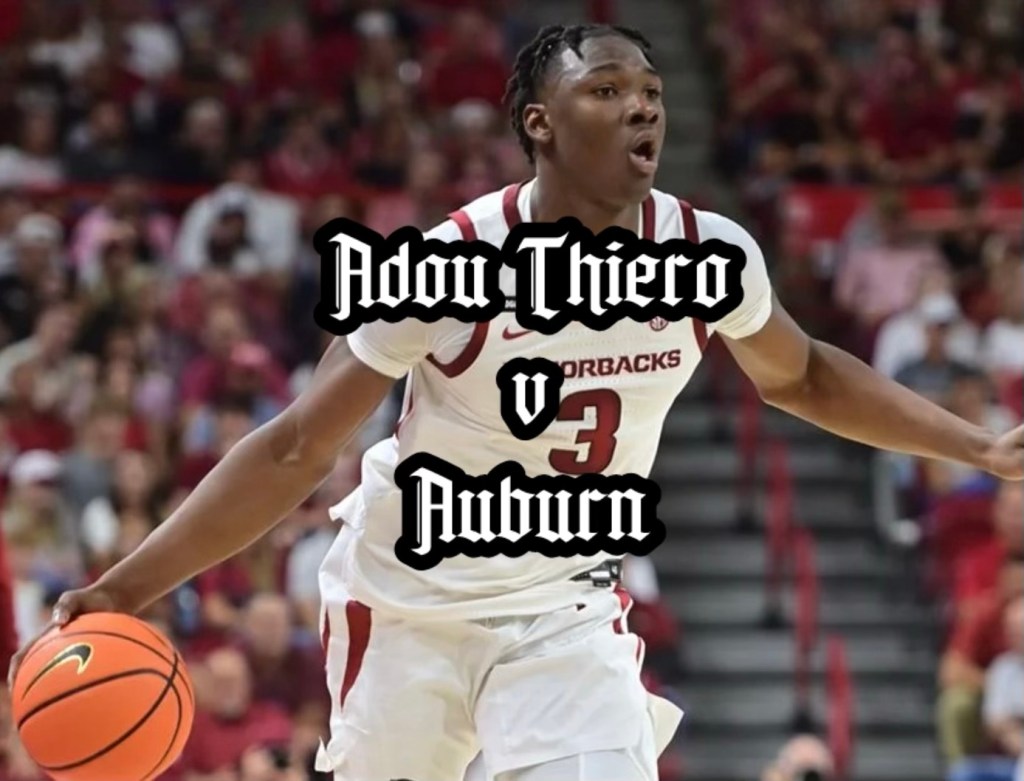
Arkansas faced off against Auburn on Wednesday, February 19th. Despite putting up a strong fight against the nation’s top-ranked team, Arkansas fell short, losing 67-60. I tuned in to focus on Adou Thiero—let’s break down his performance.
Thiero started the game with high energy, contesting shots well on defense and even knocking down a corner three. While he’s not known as a great shooter, he also hit a turnaround fadeaway in the mid-range. His athleticism was on full display with an acrobatic scoop layup through contact—easily his most impressive play of the first half. He also came up with a steal and frequently attacked the paint, creating open looks for his teammates.
In the second half, Thiero maintained his consistency. He continued showcasing his athleticism with an alley-oop slam and another tough layup through contact. Defensively, he took on multiple assignments, guarding different positions from Johni Broome to Tahaad Pettiford. His playmaking remained a factor, but Arkansas ultimately couldn’t overcome Auburn’s firepower.
Overall, for Thiero to make an impact at the next level, he’ll need to be an energy guy. His shooting must improve significantly if he wants to be a real offensive threat. Auburn’s defenders often sagged off him, anticipating drives, which led to tough shot attempts. While his active hands and versatility on defense were noticeable, there’s still room for growth on that end. At the very least, he needs to develop a reliable mid-range jumper to make his offensive game more effective. He also shot 3-of-6 from the free-throw line—an area that needs improvement, especially since his aggressive driving style will put him at the line frequently.
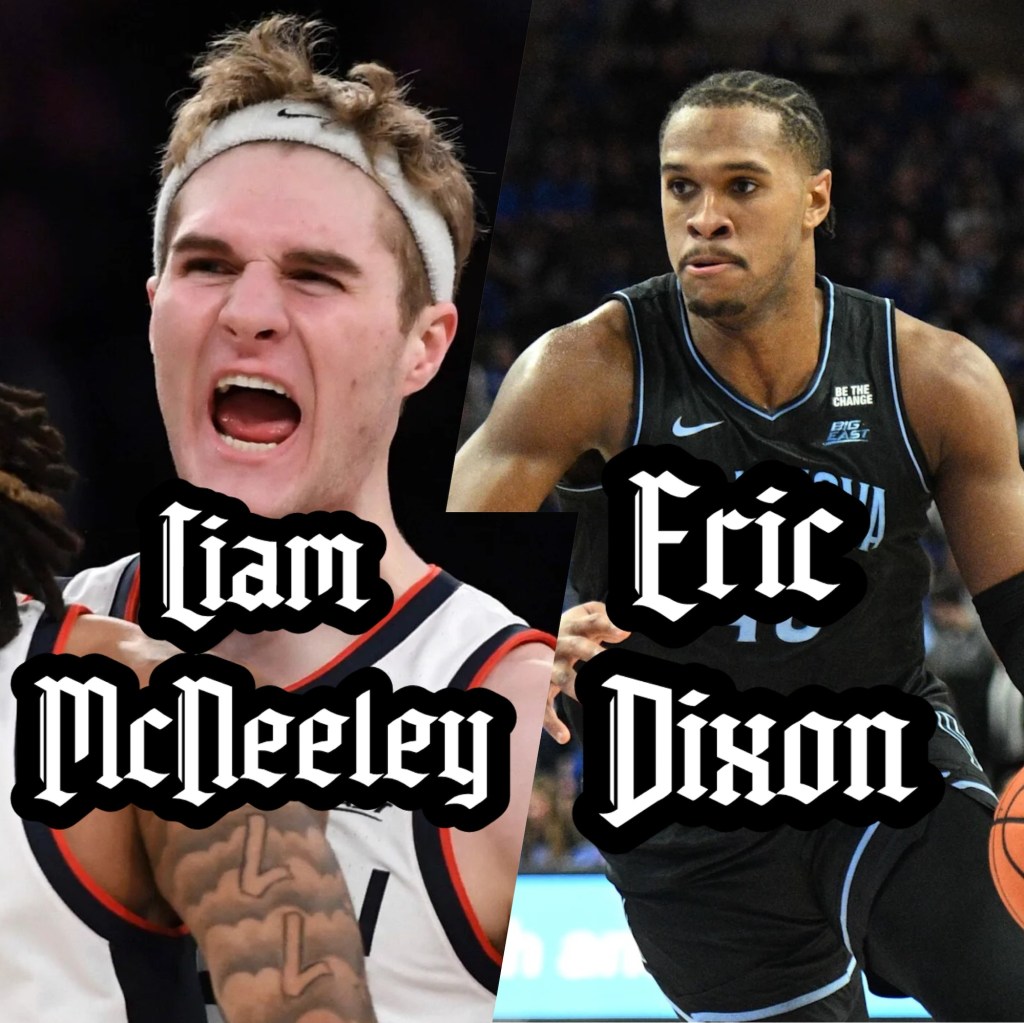
UConn and Villanova battled to the very end of this game. UConn clawed their way back after trailing for most of the night and secured a hard-fought win. I tuned in to watch Liam McNeeley, Eric Dixon, and Alex Karaban, and there was plenty to break down.
Liam McNeeley
In the first half, McNeeley got some good looks from three and around the basket but struggled to find his rhythm. Despite the adversity, he brought energy—one key moment was breaking Nova’s press and finishing with a layup, trying to spark his team. He also played solid defense, contesting shots and coming up with a strip for a steal. However, he made a costly foul just before halftime, sending Eric Dixon to the free-throw line when he didn’t need to.
In the second half, McNeeley knocked down his only three-pointer of the game—a huge shot that cut the lead to three. He also secured key rebounds in crunch time and was perfect from the free-throw line, going 9-for-9. Down the stretch, he was instrumental in UConn’s comeback.
Overall, despite his struggles, McNeeley showed perseverance and played a major role in the win. Offensively, he can score and make smart passes, but defensively, he was targeted. Dixon took advantage of mismatches, and Poplar blew by him a couple of times. He’ll need to improve his lateral quickness to stay in front of his man. That said, his competitive fire in clutch moments is something you have to appreciate.
Eric Dixon
For a 6’8”, 265-pound player, Dixon moves well—he reminds me a bit of Zach Randolph. In the first half, he made an impact on both ends, protecting the rim with a block and knocking down threes, including one from deep range. He consistently drew fouls and went 9-for-12 from the free-throw line. Nova runs a lot of their offense through him, and he made key passes out of double teams.
However, the second half was a different story. Nova’s offense stalled, Dixon faced constant double teams, and their shots stopped falling. Down the stretch, when they needed him most, he couldn’t quite deliver. That said, he continued making the right reads—the shots just didn’t go in.
Overall, Dixon’s agility at his size is impressive, but the big question is whether he can stay in front of NBA wings. He has a smooth shooting touch and solid passing instincts, so his transition to the next level will be interesting to watch.
Alex Karaban
Karaban had a quiet night but made solid contests on defense, even though Nova hit tough shots over him. He had a great block on a baseline cutter in a crucial moment, showing his defensive awareness. Offensively, he’s an excellent cutter, constantly finding open space to create opportunities for himself and his teammates.
I’ll continue watching film to further evaluate these young talents.
Honorable Mentions
- Solo Ball – A name to watch moving forward.
- Tarris Reed Jr. – Made a major impact in shifting the momentum of the game.
- Jordan Longino & Wooga Poplar – Both hit tough shots and scored well.
This game was a grind, and UConn showed resilience to pull out the win. Plenty of takeaways from this one.
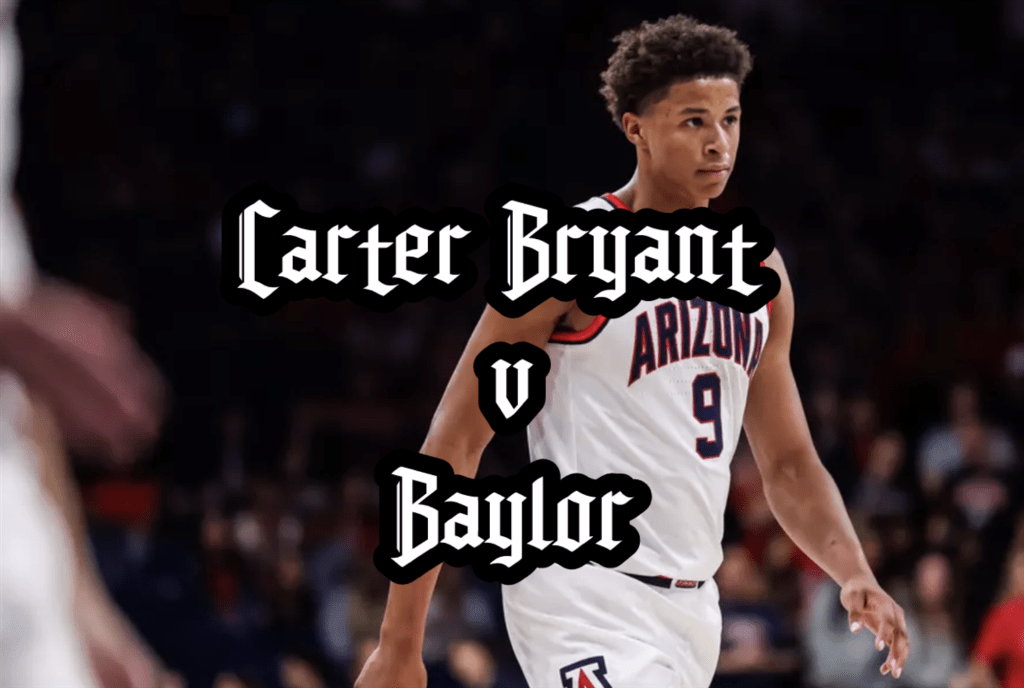
Arizona took care of business last night against Baylor, securing a 74-67 win. The Wildcats controlled the game, even as Baylor fought to claw their way back. VJ Edgecombe put up an impressive 24-point performance, but my focus was on Carter Bryant.
From the moment Bryant stepped onto the court, he made his presence felt—rebounding, passing, and defending Edgecombe. What stood out most was his defensive matchup against VJ, where Bryant showcased his ability to make things difficult for an elite talent. While Edgecombe still got his buckets, Bryant made him work for it on several possessions.
Offensively, Bryant flashed his athleticism with a baseline cut for an alley-oop slam, demonstrated his catch-and-shoot ability by knocking down a three, and showed off his playmaking with a bullet pass from the wing for an easy bucket.
Bryant had a quiet second half. At halftime, he had 5 points, 5 assists, and 6 rebounds, finishing the game with 7 points, 6 assists, and 6 rebounds. However, his final two points came on clutch free throws with under a minute left. Defensively, he remained engaged, picking up Edgecombe down the stretch and making a beautiful full-court pass for a layup. There’s a lot to like about Bryant, but he’s still a raw prospect in need of development.
During the game, I tweeted that Carter Bryant reminds me of Jayson Tatum—minus the offensive bag, and I want to elaborate. Right now, Bryant’s scoring arsenal is limited to his three-point shooting and athleticism. To take his game to the next level, he needs to develop his ball-handling. Once he gets comfortable putting the ball on the floor, he can expand his offensive repertoire. That said, he’s an intriguing prospect, and with the right development, he has the potential to be a star.
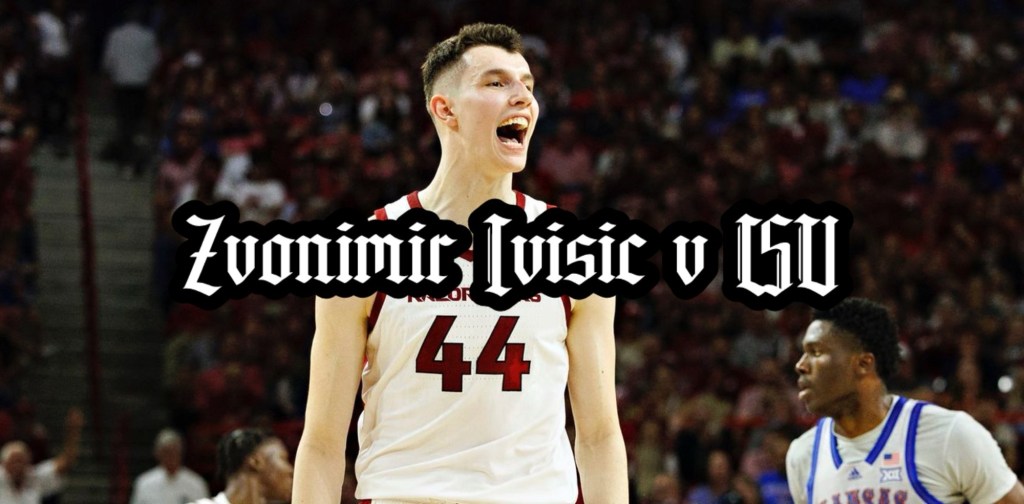
This was a back-and-forth game between LSU and Arkansas. After Arkansas’ last game against Alabama—where Ivisic put up 27 points, hit five threes, and stuffed the stat sheet—I knew I had to tune in. Arkansas pulled away from LSU and secured a 70-58 victory. Let’s break it down.
Right from the start, Ivisic made an impact on both ends of the floor, blocking shots on defense and scoring for his team. His rim protection stood out, as he rejected multiple shots, including an impressive recovery block. He also showcased his shooting ability, knocking down a three off a screen. On the very next possession, he blocked a shot and then set up a wide-open teammate for three—though the shot didn’t fall. That sequence really caught my attention in the first half.
In the second half, Ivisic continued to display his skill set, facilitating for teammates off screens and hitting threes in pick-and-pop situations. There’s no doubt he has a smooth shooting touch and elite shot-blocking ability. However, there are still areas where he needs to improve.
At 7’2”, Ivisic’s combination of rim protection and three-point shooting is intriguing. That said, he struggles around the rim and in the post. Most notably, his rebounding is below average for a seven-footer. He also made some poor decisions with the ball, including putting it on the floor in traffic off pick-and-roll actions, which led to a turnovers. I’ll continue watching film and reassessing my evaluation as the season progresses.
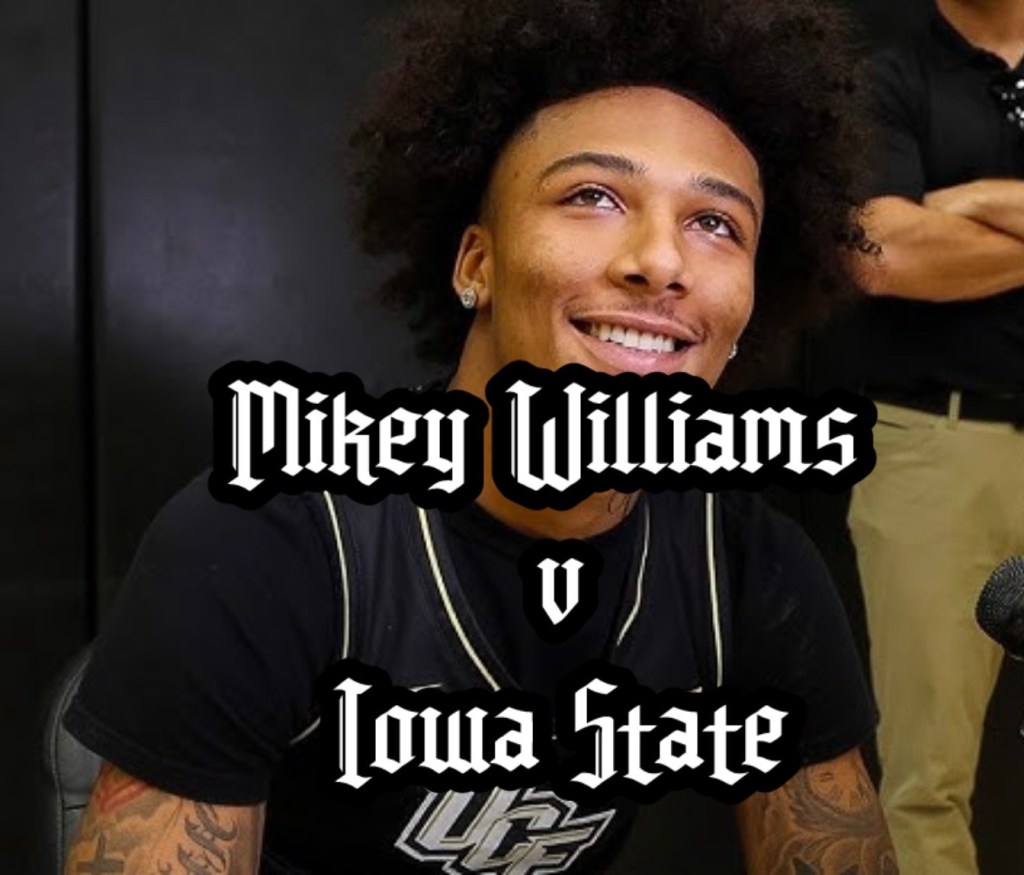
Mikey Williams had the best game of his college career so far. Unfortunately, it didn’t result in a win—Iowa State was locked in last night. But for Williams, who has been through a lot, I believe it’s only up from here. Let’s get into the details.
In the first half, Williams made a few nice plays, playing unselfishly and staying engaged defensively. He showed off his quickness and scoring ability, particularly on a smooth baseline move that led to a floater. He also displayed his shooting touch, knocking down a corner three. My favorite play, though, was him hustling back in transition to draw a charge—what can I say, I’m a defense guy.
In the second half, Williams showcased the athleticism we all know he has. He soared for a rebound early on and later cut baseline for a reverse jam. He also continued to knock down catch-and-shoot threes, which forced defenders to respect his outside shot—making it even easier for him to blow by them.
Overall, this was a solid building block for the rest of his collegiate career. At times, his body language can make him appear disengaged, but he competes on the defensive end. Williams has all the tools to be a really good basketball player. I’d like to see him locked in defensively for the entire game—if he can do that, it’ll open up even more freedom for him offensively. Honestly, I’m more excited to watch him next year than this year.
Final stat line: 14 points, 3 rebounds, 1 assist, 1 turnover, 3 personal fouls.
Shooting: 6-12 from the field, 2-4 from three.
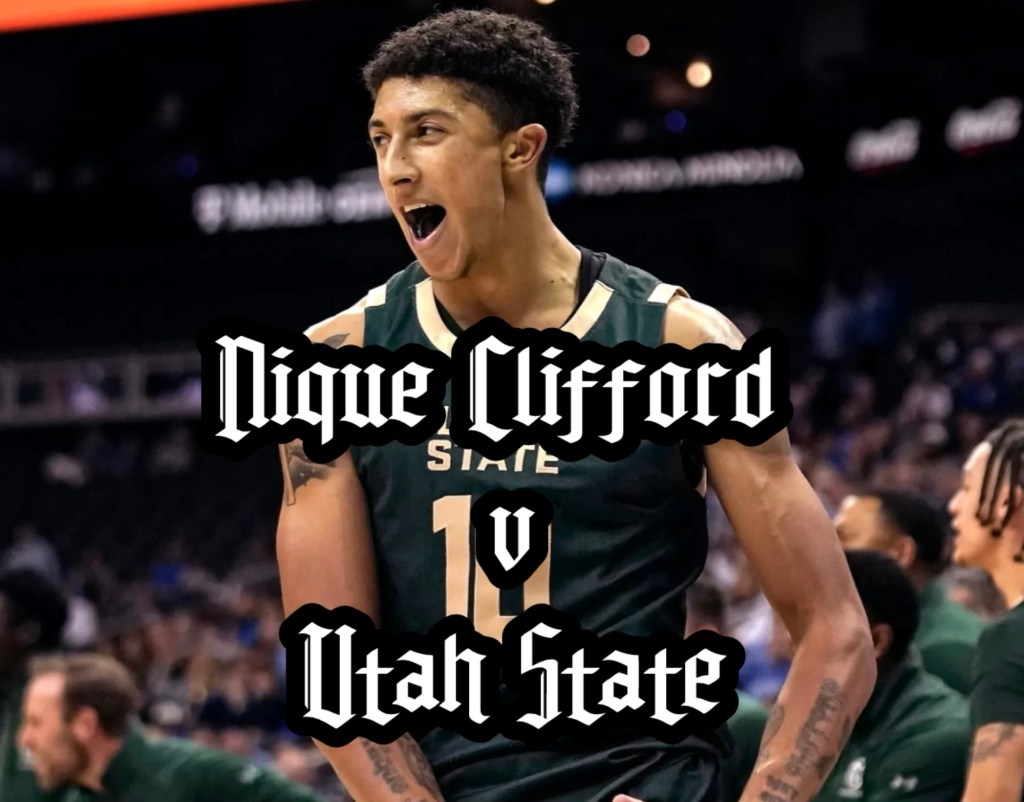
Utah State dominated this game, responding every time Colorado State put together anything significant. For most of the game, Colorado State managed to cut the lead down to 15, but that was about it. The closest they got was within seven points late in the second half, but by then, the game was already sealed. I tuned in to spotlight Nique Clifford—let’s get into the breakdown.
In the first half, Clifford played unselfishly, moving the ball well. He showed off his athleticism on a strong baseline drive, going up for a dunk but getting fouled and converting both free throws. I felt he should have looked for his own shot more, but once Colorado State fell behind by 15, he became more aggressive. Utah State, meanwhile, was on fire. Clifford knocked down an impressive one-dribble, step-back jumper from the baseline. I also noted his quick first step and constant defensive activity.
In the second half, Clifford got himself more engaged in the offense, knocking down catch-and-shoot threes and getting to the free-throw line, where he went a perfect 9-for-9. His passing and defensive intensity carried over as well. One standout play was a beautiful cross-court pass that found his teammate wide open for a corner three—an absolute dot. My favorite sequence, though, was a closeout block on a three-point attempt that led to a three-pointer on the other end. Even though the game was never really close, I appreciated Clifford’s energy never dipping.
Overall, Clifford looks like a plug-and-play 3&D specialist. He’s not the craftiest ball handler, and his dribble could use some tightening. He also didn’t seem entirely comfortable pushing in transition. There’s nothing flashy about his game—but that’s perfectly fine. He simply gets to his spots and produces.
Final stat line: 24 points, 16 rebounds, 3 assists, 1 block, 1 turnover and 1 personal foul.
Shooting – 6-15 from the field, 3-7 from three and 9-9 from the free throw line.
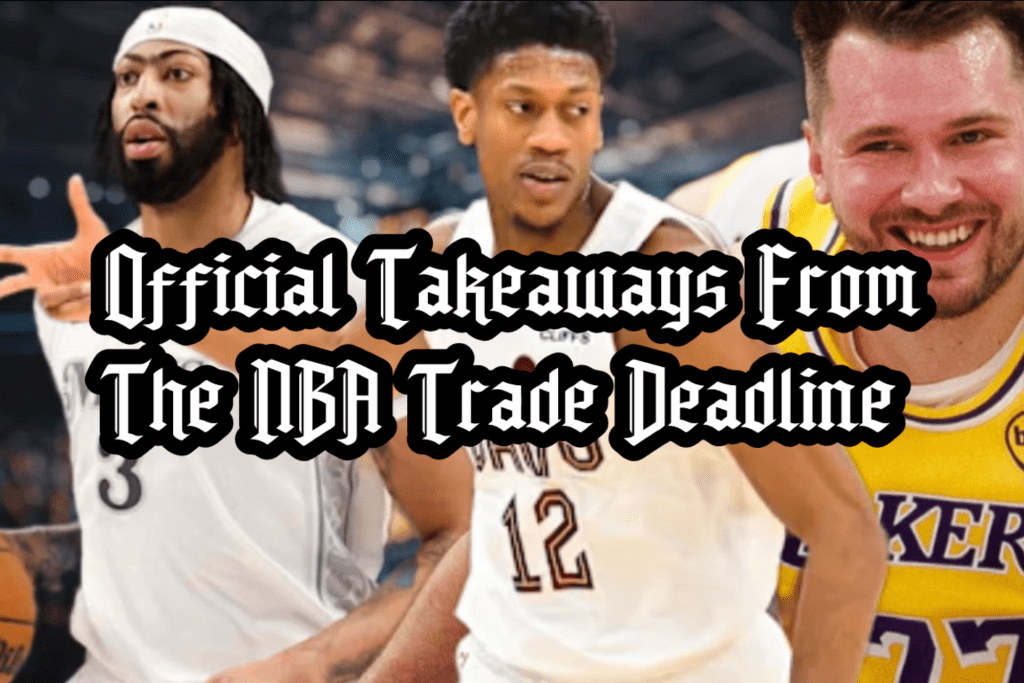
The drama in Miami is finally over—Jimmy Butler has found a new home in the Bay. Meanwhile, the Lakers pulled off a remarkable trade for Luka Dončić. But what about everything in between? Who came out on top, and who took a loss? Let’s break it all down.
Jimmy Butler to the Warriors – A
The Warriors had to make a move, and it doesn’t get much better than Jimmy Buckets. With Steph and Butler’s championship window closing, they now pose a serious threat to all contenders.
Andrew Wiggins to the Heat – B
Despite all the drama and toxicity, Pat Riley still managed to get a decent return. Wiggins could be a solid piece for Miami, depending on what other moves they make in the offseason. Plus, with their young talent developing, the Heat could be a tough team next year.
Luka Dončić to the Lakers – A+
I mean, it’s Luka Dončić. Have I been extremely critical of him? Yes. Have I called him a defensive cone? Also yes. But Luka has shown flashes of being able to hold his own on defense, and at the end of the day, he’s a top-five—arguably top-three—offensive option. The Lakers have found their successor for when LeBron James decides to call it quits… another 20 years from now.
Anthony Davis to the Mavs – Z-
The Mavs traded Luka for every excuse in the book and claimed they were in “win-now” mode. Well, now AD is out indefinitely, and there goes that. We can point fingers at Nico Harrison, but we can also speculate that this decision came from higher up.
De’Aaron Fox to the Spurs – A
Wemby finally has his running mate, and the Spurs will add even more talent through the draft. In the meantime, they have the luxury of soaking up knowledge from Chris Paul. Fox is the second option this team needed, complementing their young core, including Castle.
Zach LaVine to the Kings – C
Did the Kings forget that LaVine and DeRozan already played together—and it didn’t work? This isn’t a knock on LaVine; he’s having a phenomenal season. Honestly, I would’ve loved to see him land somewhere like Denver. For this trade to pay off, the Kings will need to hit in the draft.
Brandon Ingram to the Raptors – B
When healthy, Ingram is an absolute bucket. I like what the Raptors are building with Scottie Barnes, IQ, and RJ Barrett, and now they’re adding Ingram into the mix. But his injury history will determine the true value of this trade.
De’Andre Hunter to the Cavs – A+
The Cavs addressed their biggest area of concern by bringing in a guy who’s having a fantastic season and adds even more versatility to an already well-rounded roster. Hunter may be known as a 3&D guy, but he brings more than that to the table. This was the most underrated move of the deadline, and the Cavs are legitimate contenders this year and beyond.
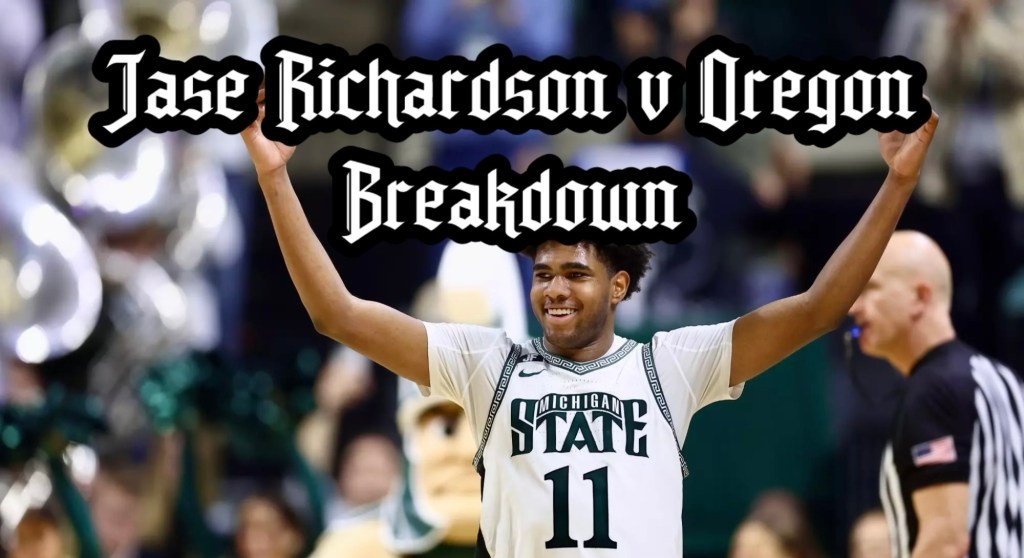
The way the first half of this game went, you’d think Michigan State didn’t have a chance. They found themselves down by 14 against Oregon but managed to storm back for the win. It took a full team effort, but Jase Richardson—who I’d been meaning to watch—carried the scoring load.
Oregon came out hot, thanks to Shelstad and Nate Bittle. Bittle started strong, making an impact on both ends of the court. He has a smooth three-point shot and the ability to protect the rim defensively. He showed off his shooting touch on a pick-and-pop play and made his presence felt on defense, swatting away a shot with authority.
As for Bittle’s flaws, speed is his biggest one—man, that boy is slow as molasses lol. He puts in the effort, but he’s just not quick. Guards blow past him, and it takes him a while to get up and down the court. I have a tough time seeing him make it to the next level.
On the other hand, Jase Richardson put on a show, dropping a career-high 29 points and displaying a full repertoire of shot-making skills. In the first half, he knocked down threes both off the catch and off the dribble. While he’s not the fastest or most athletic guard, he’s crafty, knows how to use his body to draw fouls, and gets to the free-throw line. He also showed great patience in the paint, snaking his way to mid-range jumpers.
The second half was where Richardson really shined, pulling off some absolutely beautiful shot-creating moves. The highlight? A nasty snatch-back hesitation that got him past his defender for a tough layup. And keep in mind, he was doing this against a strong, physical guard in TJ Bamba. He did take a couple of questionable shots, but when your game is working like his was, we can let that slide. On defense, he was active too, coming over for a help-side rejection that sent the ball into the seats.
Looking back at this performance, I was really impressed with Richardson’s ability to create for himself. Especially considering he’s not the fastest or most athletic guy, that’s the mark of a true scorer. As always, I’ll keep watching and assessing as the season goes on.
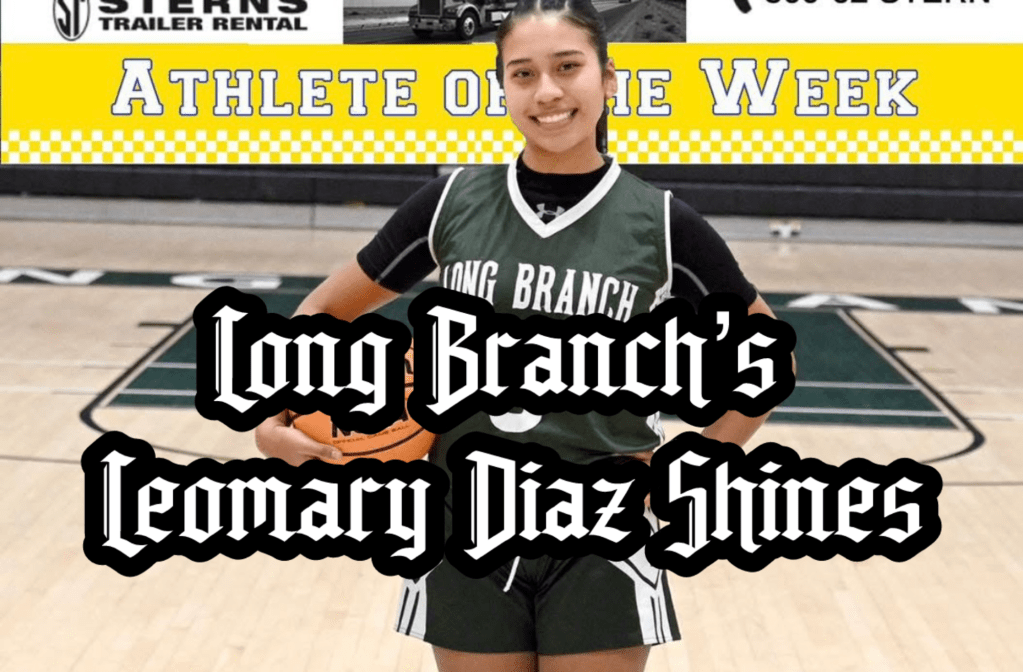
From the opening tip, Leomary Diaz was a force to be reckoned with, making play after play. She led all scorers with 34 points, but Donovan H.S. didn’t go down without a fight. Let’s get into the details.
In the first quarter, Diaz made a beautiful play, rejecting the screen and setting herself up for a smooth jump shot. A common trend you’ll hear me mention is her ability to draw fouls—Diaz practically lived at the free-throw line throughout the game.
In the second quarter, she continued to lead the way for her team. Despite being face-guarded and pressured full court, Diaz went behind the back, putting her defender on skates before getting into the lane for a beautiful dish. Unfortunately, it didn’t result in a basket, but it was still an impressive play. Time and time again, she found her teammates for open looks. Just before the halftime buzzer, Diaz drew another foul and knocked down all three free throws, sending Long Branch into the break with the lead.
To start the second half, Donovan came out swinging, taking a one-point lead. They caught fire from beyond the arc, knocking down threes and shifting the momentum. Long Branch needed an answer, and Diaz delivered—hitting two huge threes of her own and reclaiming the lead. Heading into the fourth quarter, Long Branch remained in control, and Diaz sealed the win delivering at the free-throw line.
Overall, Leomary Diaz is a talented player with a high basketball IQ. She excels at setting up teammates and using her body to get to the free-throw line, and she can knock down shots from all over the court. But like all players, she has areas to improve. She could benefit from tightening up her ball-handling and has a tendency to rely on her hands rather than her feet on defense. That being said, it’s important to remember that Diaz carries a heavy offensive workload, which could explain the occasional lack of defensive intensity—though she still comes away with steals and deflections.
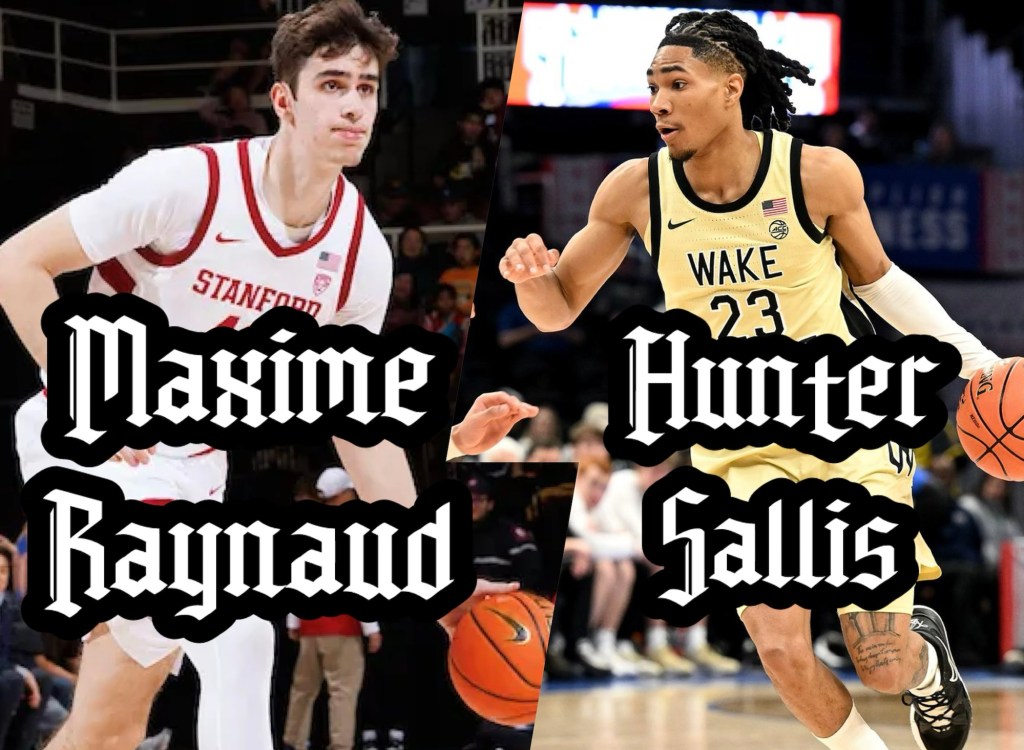
Another thrilling college basketball matchup, headlined by Maxime Raynaud and Hunter Sallis, came down to the wire. These two are the engines that drive their teams, and this game was no exception. In the end, Wake Forest pulled out a hard-fought 79-73 victory. Let’s break it down.
Maxime Raynaud
Raynaud, a skilled 7-footer who can stretch the floor with his three-point shooting, played a unique role for Stanford last night. He was tasked with bringing the ball up and initiating the offense, showcasing his versatility.
His passing was impressive—one standout moment was a beautifully timed lead pass to a cutting teammate while the defender trailed behind. Time and time again, Raynaud made smart reads, particularly when facing double teams in the post. He consistently found open teammates, demonstrating great vision and feel for the game.
However, Raynaud had his share of struggles. He made some questionable decisions, forcing passes that were easily intercepted by Wake Forest’s defense. The pressure got to him at times, resulting in five turnovers. Offensively, it wasn’t his best night either. Wake Forest’s defensive scheme disrupted his rhythm, and he finished with 16 points on 4-11 shooting, including just 1-7 from three. On the bright side, he secured a double-double with 10 rebounds—no surprise given his rebounding ability. He also dished out six assists, a number that could’ve been even higher if his teammates had capitalized on his passes. Raynaud also showed flashes of putting the ball on the floor, but that’s an area that still needs refinement.
Defensively, it was a mixed bag. He struggled at times, getting scored on both in the post and on the perimeter by quicker guards. Still, his active hands made an impact, as he finished with three steals.
Overall, this wasn’t Raynaud’s best performance, but that was largely due to Wake Forest’s defensive focus on him. At the NBA level, he won’t be asked to create offense as much, but he’ll need to knock down threes consistently and improve his defense to make an impact.
Hunter Sallis
Sallis had a relatively quiet first half, but when Wake Forest needed him most in the second, he stepped up in a big way. Down the stretch, he was the go-to guy, delivering in critical moments.
Sallis thrives in the mid-range, and I love it. With the NBA’s emphasis on the three-ball, the mid-range is often wide open, and Sallis can take full advantage. He got into the paint all night, knocking down tough shots and setting up teammates for open looks. Not every drive was perfect—he had a couple of turnovers when he got caught in traffic—but overall, he was impressive.
On the glass, Sallis showed his rebounding ability, finishing with seven boards. Defensively, his intensity stood out. One notable play saw him sprint to contest Raynaud’s three-point attempt at the top of the key, then recover to challenge his own man’s corner shot, forcing a miss.
In the clutch, Sallis delivered. He calmly sank four key free throws late in the game, finishing 7-9 from the line. His performance sealed the win for Wake Forest.
Final stat line: 19 points, 7 rebounds, 5 assists, 3 steals, 1 block, and 3 turnovers—a complete performance.
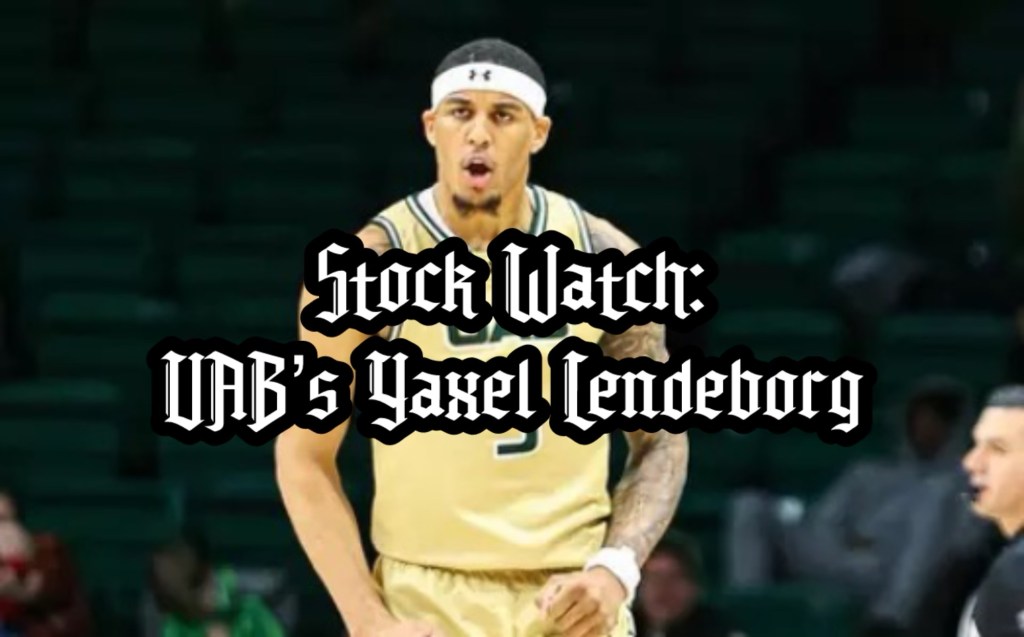
UAB vs. North Texas: A Competitive Battle & My Spotlight on Yaxel Lendeborg
Lendeborg didn’t disappoint. He had a quiet first half but took over in the second, scoring 13 of his 17 total points. He finished the game with an impressive stat line: 17 points, 13 rebounds, 3 assists, 3 steals, and a block. Lendeborg could have easily racked up more assists, but his team’s shots weren’t dropping.
Initial Thoughts
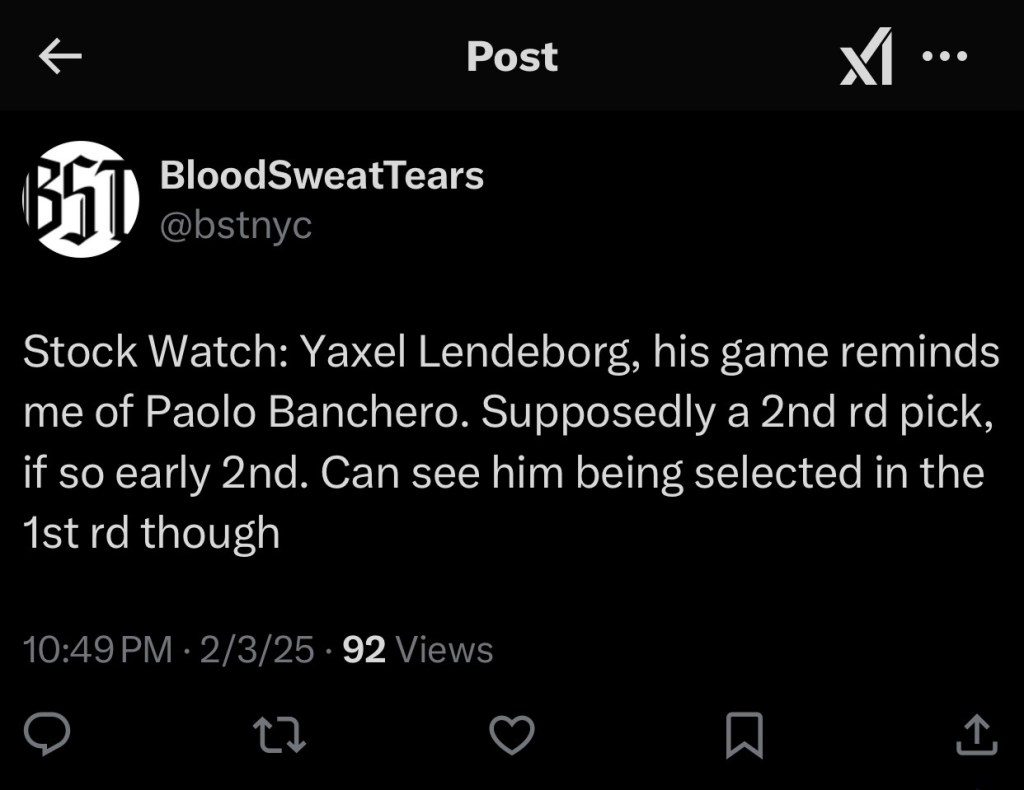
Lendeborg, a 6’9″ point forward, constantly pushed the ball up the floor, especially after grabbing rebounds. In the first half, he displayed his ability to find open teammates, his high defensive IQ by causing deflections and steals, and his versatility by switching onto guards while keeping them in front. He also showed great poise and patience when double-teamed, never rushing his decisions.
One standout play from the first half was a beautiful dime from the top of the key to a cutting teammate for an easy layup. He also came away with a steal—despite having his back to the ball—showing great instincts before taking it coast to coast for a slam. Another steal showcased his quick hands in the passing lane, though it led to a missed dunk in transition by his teammate. These were just a few of the plays that caught my eye early on.
Lendeborg Takes Over in the Second Half
This was a tight game, and Lendeborg made his presence felt even more in the second half. Before diving into his key plays, it’s worth noting that he was vocal and constantly directing his teammates on defense throughout the game.
Offensively, he showcased his mid-range game, repeatedly getting to his spots and knocking down shots, including a smooth turnaround jumper—cash. Defensively, he remained aggressive. Even when he got beat off the dribble, he recovered quickly to block the shot. He also forced another steal, leading to another dunk. Lastly, at the end of the game Lendeborg sank two clutch free throws to put his team up three. His two-way activity stood out, and I firmly believe that if he’s taken in the second round, a team will be getting first-round talent.
Areas for Improvement
Lendeborg had two noticeable mistakes in this game. First, he got caught napping on an inbound play, allowing a backdoor layup. Second, after securing an offensive rebound, he put the ball down in traffic for a power dribble and turned it over.
Final Thoughts
Yaxel Lendeborg is a fascinating prospect, and I expect to hear his name more as we approach the draft. After watching some highlights, it’s clear he has a nice touch from three as well. He plays both ends of the floor, has a high basketball IQ, and shows the ability to create and score. A second-round pick? I’m not so sure. I’ll continue watching and assessing as the season progresses.
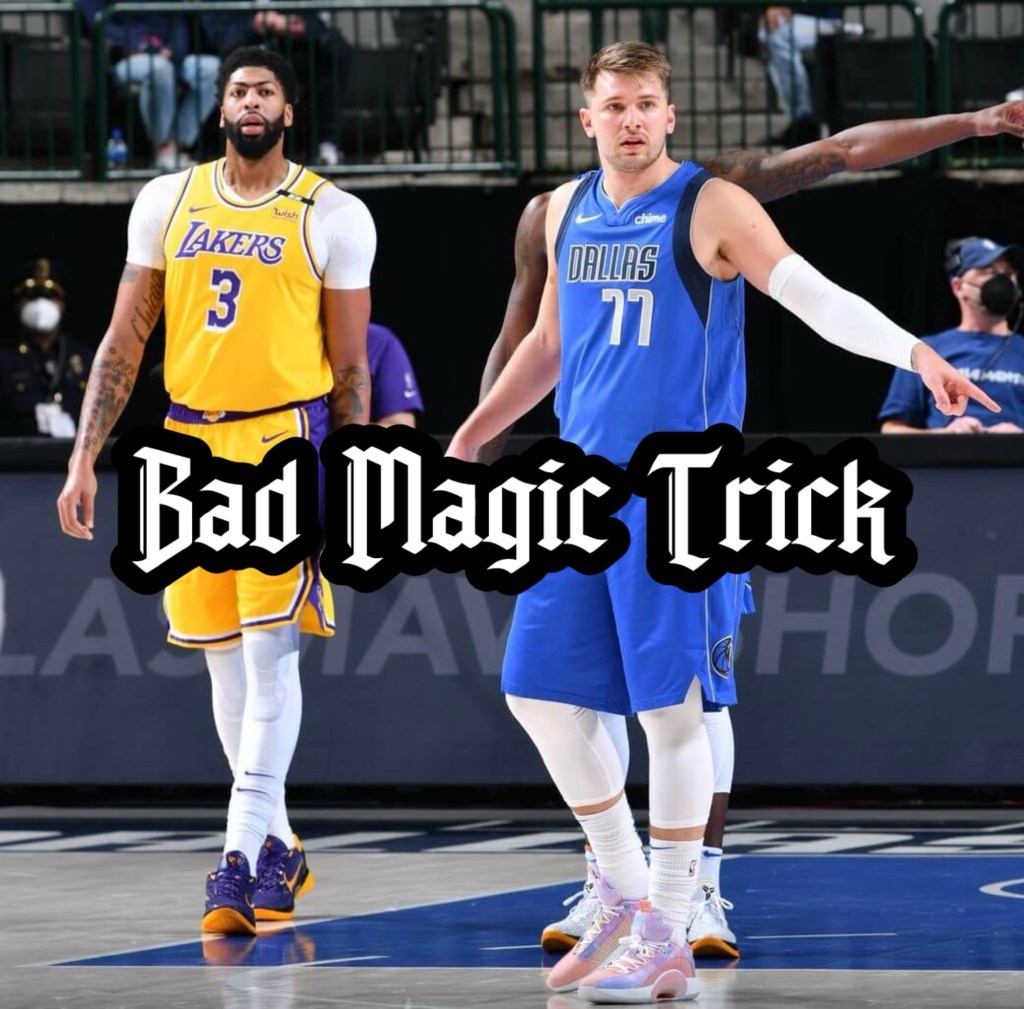
Either the Luka Dončić trade goes down as one of the worst in NBA history, or Nico Harrison proves to be one of the brightest GMs ever. At first, many—including myself—thought Shams had to be hacked. There was no way the Mavs just traded their 25-year-old franchise player fresh off a championship run. And yet, they did. This just goes to show: NOBODY is safe in the business of the NBA. Let’s get into it.
Of course, the Mavs didn’t just give Luka away for nothing. Anthony Davis is arguably the Defensive Player of the Year and can drop 30 on any given night. He helped the Lakers win a championship in 2020 and will now pair up with another champion, Kyrie Irving. Max Christie has also been a solid young player, showcasing his 3&D prowess. Reports suggest the Mavs aren’t done making moves, but even with future additions, is this really a win-now team? Maybe if they bring in Jimmy Butler. But as currently constructed, this squad isn’t getting the job done.
Listen, I’m not the biggest Luka fan. I’ve called him a defensive cone and prefer players like Kawhi Leonard, SGA, and Jimmy Butler. But you can’t ignore what he’s done offensively. The Lakers are getting one of the best scorers in the league at just 25. Luka has hit clutch shots in the playoffs and carried the Mavs on his back multiple times. To me, this signals a rebuild in L.A., and LeBron should be the next player on the move. There’s no way either of these teams beats OKC. There are also rumors that the Mavs didn’t want to pay Luka $345 million over five years, citing concerns about his weight (reportedly 270 lbs). If that’s true, he’ll definitely need to get in better shape.
Looking at Luka’s playstyle, he and Harden are essentially the same player. If we go back to the 2018 playoffs, you could argue Harden would have won a championship if Chris Paul hadn’t gotten hurt. That, as much as I hate to say it, would make Harden’s “I am the system” claim true. The Mavs had that same dynamic with Luka and Kyrie—an elite backcourt with defense around them—which makes this trade even more mind-blowing. Luka and Kyrie were a force to be reckoned with, but unfortunately, Luka couldn’t stay healthy. That’s part of the game.
So, who won the trade?
The Lakers. Luka Dončić is a 25-year-old superstar, and now he’s wearing purple and gold. Honestly, I still can’t believe he was traded. I even had a conspiracy theory that the NBA pushed for this to get Luka into a big-market team—that’s how shocking this move was.
For the Mavs, it’s championship or bust. And honestly, I’d even say championships or bust.
I can’t help but wonder: Are teams feeling pressured to swing big because of how dominant the Celtics and OKC look? Is this a direct response to OKC’s rise? They’re the real dynasty in the making. If you don’t believe me, go look at their future draft picks. But that’s a story for another day.
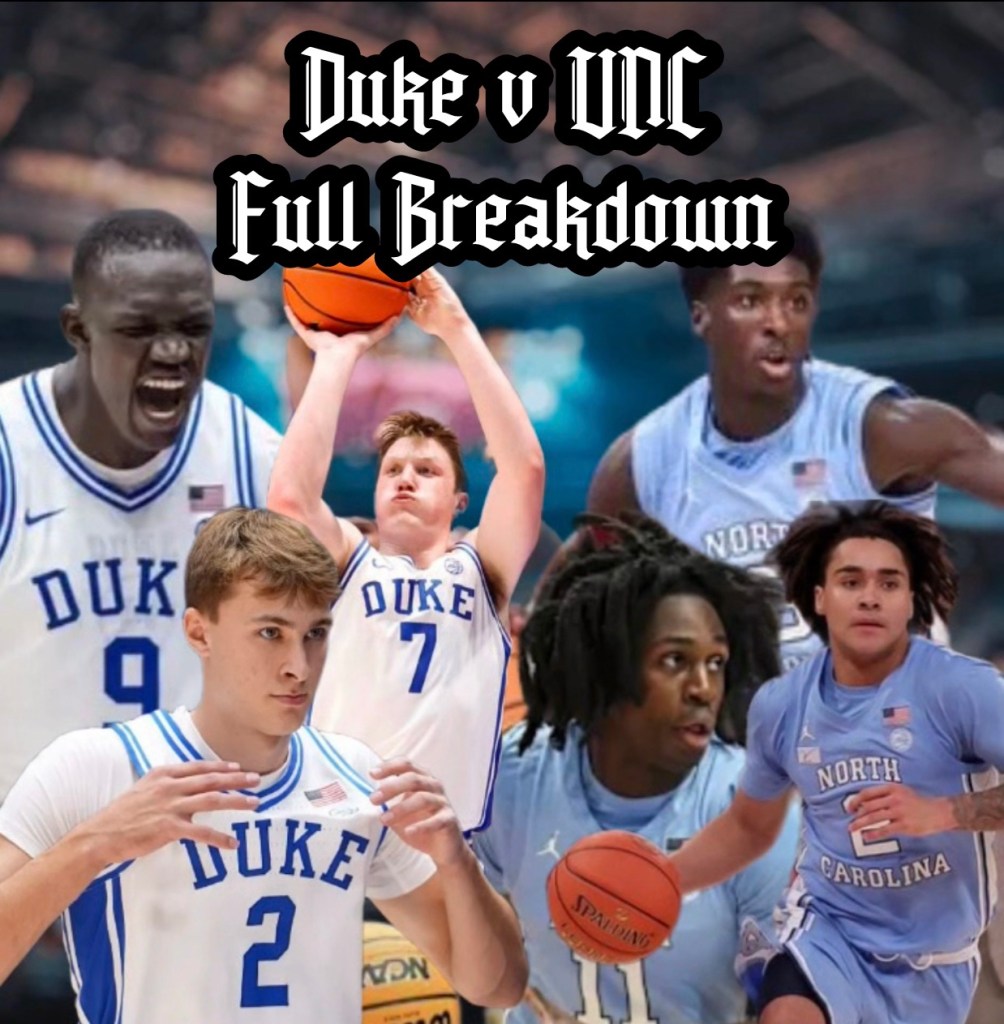
From the opening tip, Duke dominated this game, with Cooper Flagg setting the tone. North Carolina struggled to generate any offense, showing only brief signs of life in the second half—but nothing substantial. With multiple prospects on display, let’s dive into each breakdown.
Cooper Flagg
Flagg made his presence felt on both ends of the floor. Whether it was making the right read out of a double-team or creating his own shot, he was locked in from the start. Defensively, he was active in the passing lanes, leading to easy runouts in transition. He knocked down threes, involved his teammates, attacked the basket, and excelled in transition. The play that stood out most to me was a cross-court pass out of a post double-team—an absolute dime—that set up a Tyrese Proctor corner three. Flagg’s game is the most polished in this class, and he’s undoubtedly the frontrunner to be the No. 1 pick in the draft. He finished with 21 points, 8 rebounds, 7 assists, 3 steals, and 2 blocks.
Elliot Cadeau
Cadeau did his best to spark UNC’s offense, but Duke’s length and UNC’s poor shooting made it a tough night. I like his ability to create off the dribble, especially in pick-and-roll situations, but he turned the ball over a few times while trying to get things going. In my opinion, he was a bit too unselfish—he could’ve taken advantage of mid-range opportunities instead of always looking to pass. Don’t get me wrong, he made some beautiful passes, but I would’ve liked to see him be more aggressive in taking his own shots. Cadeau finished with 8 points, 4 rebounds, 3 assists, and 5 turnovers.
Kon Knueppel
Back to Duke—Kon Knueppel had an efficient game. We all know he can shoot, but he also made plays off the bounce and found teammates for easy buckets. When he gets to the league, I see him primarily as a sharpshooter who can capitalize when defenders fly by on a pump fake—maybe I’m wrong, but that’s my read for now. He uses his body well to get to his spots, but I’m still skeptical about how effective he’ll be at the next level.
Drake Powell & Ian Jackson
UNC’s other two key prospects were Drake Powell and Ian Jackson. I’ve been watching Jackson since high school—I even saw him play at The Battle in Queens—so I know what he’s capable of. But last night just wasn’t his night. Like the rest of UNC, he struggled offensively. He’s at his best with the ball in his hands, Jackson also tried to get to the rim, but Duke packed the paint and made it nearly impossible to finish inside.
Powell, on the other hand, showed flashes of potential. He knocked down a three—an area he needs to continue improving—and attacked the rim with aggression. What I liked most was his energy. He played with a “never-give-up” mentality and was active on defense, causing deflections and coming away with a steal.
- Ian Jackson: 8 points, 2 rebounds, 2 assists, 3-3 FT
- Drake Powell: 12 points, 1 rebound, 1 assist, 1 steal
Other Duke Prospects
As for Duke’s other key players—Maluach, James, Proctor, and Evans—Maluach stood out the most. He had a dominant performance, but I have concerns about his ability to guard quicker players at the next level. With the NBA being so spaced out, I’m not sure he can keep up with guards on switches. Maybe I need to watch more, but that’s my initial read.
James and Proctor both played strong defense, with Proctor also being a reliable catch-and-shoot option. I see them being used as primary on-ball defenders tasked with slowing down the opposing team’s best player. Evans didn’t play much, but when he did, he stayed in front of his man and picked up a steal. We all know he can shoot.
There’s still a lot of basketball left to be played, so I’ll continue updating my assessments as the season progresses.
First and foremost, I recommend all young hoopers watch Ace’s highlights against Northwestern. Minimal dribbles maximum results. I’m focused in on his jab-step since this is essential for all developing hoopers to have. In the first clip it’s a simple jab-step and Ace also motions the ball that way which is essential to get the defender to lean. Once that happens he’s able to rise up and knock down the shot. In the second clip Ace uses a shoulder shimmy jab-step to create space and once again knock down the shot. These are two very simple, but effective moves. On offense you’re playing chess, mind games with the defender. Let’s also keep in mind Ace likes that right side pull-up which makes his jab-step to the right that more effective. Gotta love it.
In this clip you’ll watch Cooper Flagg use the hang dribble to go into a pull up three. Flagg jab-steps right then fakes the drive left which puts the defender on his heels. Flagg backs up sizing his defender up setting him up for a hang dribble 1,2 (footwork) pull up three. Great move for all hoopers to have in their bag.
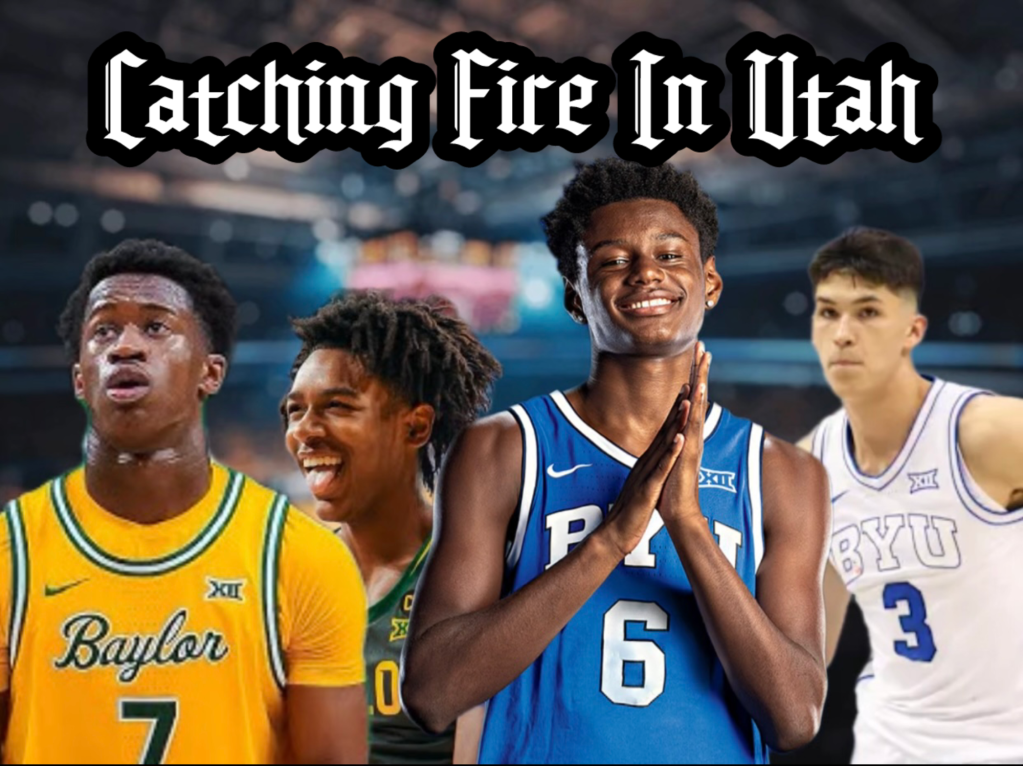
What a game we got to witness last night—a thrilling overtime battle in Utah! BYU ultimately edged out Baylor, 93-89, but man, what performances from both teams. VJ Edgecombe and Robert Wright did everything they could, but the night belonged to Kanon Catchings.
Catchings finished with a perfect 8/8 from the field, 4/4 from beyond the arc, and 3/3 from the free-throw line for 23 points. This performance undoubtedly boosted his draft stock. Not only did Catchings show off his sharp shooting, a must for any 3&D player, but he also showcased his ability to put the ball on the floor and get to the basket. His step-back move creates so much separation, and his athleticism was on full display with a jaw-dropping and-one reverse layup from the baseline. Catchings was also active on the boards and in help defense, causing consistent disruption. For a 6’9 freshman, his limited-dribble game and overall efficiency were extremely impressive.
Egor Demin did what he does best—facilitating the offense. His high basketball IQ stood out, especially when he called for a screen to clear the paint before feeding his guard with a mismatch against a bigger player. Smart, heads-up play. That said, I do have some lingering concerns. While Demin is active defensively and a gifted passer, his offensive game is still lacking. He’s not a great shooter, isn’t the quickest off the dribble, and lacks much variety in his moves. He reminds me of Josh Giddey, but I worry that Demin could struggle at the next level, where players are quicker and stronger, making it harder for him to get by. To be truly effective, Demin will need to become a more reliable outside shooter.
VJ Edgecombe, once again, had a stellar performance. He was hitting threes, attacking the rim, and creating for others. His passing was exceptional, including a perfectly timed lob over the zone for an alley-oop and impressive drop-offs on drives. I’ve critiqued VJ in the past for not driving left enough, and while he did get cut off a couple of times, he showed a beautiful off-hand floater and a lefty finish at the rim. Edgecombe finished with 28 points on 9/15 shooting, including 6/8 from three. He did miss a crucial free throw in OT that could’ve put Baylor within one possession, but he also showed his clutch DNA by hitting two massive threes.
Robert Wright had a fantastic game for Baylor, especially down the stretch. He scored 14 straight points, including two critical free throws to send the game into OT. I love Wright’s poise and quick, twitchy dribbling, which allows him to get to the basket at will. If he can develop a more consistent outside shot, he could be a real threat. Wright finished with 22 points, 6 assists, and shot 6/12 from the field, including 2/4 from three.
Lastly, an honorable mention to Richie Saunders. Saunders is a versatile scorer—he can shoot from deep, finish in the mid-range, and get to the rim. He’s someone to watch closely in his senior year.
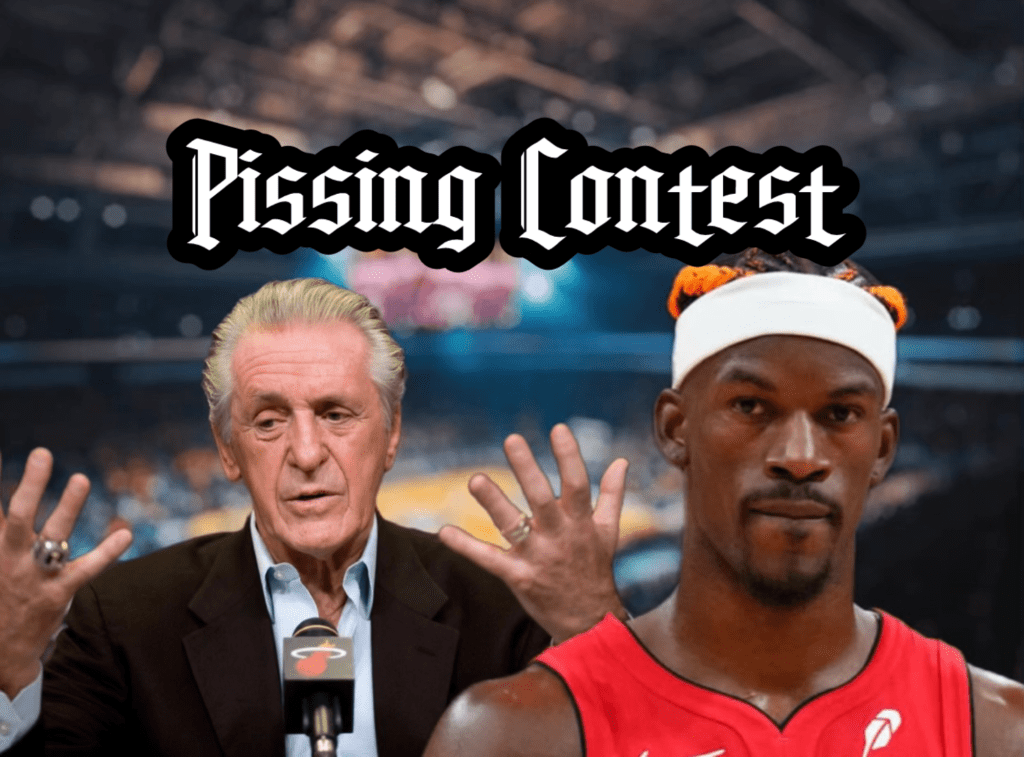
As this pissing contest continues, it doesn’t change the fact that every serious contender should be in on the Jimmy Butler sweepstakes. We’ve watched Jimmy Butler and Pat Riley go blow for blow for far too long. Both have softened their stances: Jimmy’s broadened his destination list to any team except Memphis, while Pat Riley, according to Brian Windhorst, has lowered his asking price. So, where does Butler end up?
There are a few teams that could trade for him without needing a third party, but there’s one team that should go after him hard. Another team can offer the best assets talent wise for Miami, and lastly, there’s the team Jimmy doesn’t want to play for.
If you’ve read my previous articles on this situation, you already know where I’d like to see Butler land: the Oklahoma City Thunder. Why? Butler’s playing style mirrors that of Shai Gilgeous-Alexander—except, SGA doesn’t take the regular season off. Regardless, Butler always turns into Jimmy Buckets when the playoffs roll around. Oklahoma City is a young, gritty team that could really benefit from adding someone like him. Plus, I think Butler would make a better second option than Jalen Williams, with Shai clearly as the primary. OKC also has a plethora of draft picks they can use to make a deal that would solidify their title hopes.
The next team I see as a serious contender is the Golden State Warriors. They could offer the best package—centered around Andrew Wiggins and Jonathan Kuminga. Steph’s championship window is closing, and so is Butler’s. A trade like this would give the Warriors a couple more shots at a title, assuming Butler opts into his contract next season. The question remains: Is this enough firepower for Golden State to secure another championship? I think it’s a deal worth pursuing, as I don’t see another team offering as much talent.
And then there’s the team Jimmy doesn’t want to play for: the Memphis Grizzlies. It would be the ultimate “F you,” but I’m skeptical that Riley would ever make a deal with them. I’m not sure why Butler doesn’t want to play for Memphis—championship-wise, it’s not the worst situation. However, I don’t think either Memphis or Riley should entertain this deal. Butler has already shown he won’t play if he’s unhappy, and frankly, I don’t see Memphis offering a competitive enough package. This one’s not happening.
At the end of the day, it’s a shame to see this relationship fall apart like this, but honestly, I’m not surprised. We’ve seen something similar between Pat Riley and Dwyane Wade. I get the “it’s a business, not personal” mentality, but this situation is personal. After everything Jimmy Butler has done for this franchise, Riley is essentially telling him, “I don’t believe in you, and I’m not extending you.” Meanwhile, if you look at Butler’s years in Miami, he’s done his job. Riley? Not so much. Some players deserve to finish their careers with one team, and the way Riley handles player relationships is a potential long-term detriment. Yes, Miami is beautiful, but what player would want to join the Heat knowing how Riley operates? He’s not the only one with that reputation. I still believe the Heat could have competed for a title with a few upgrades, but now it’s over.
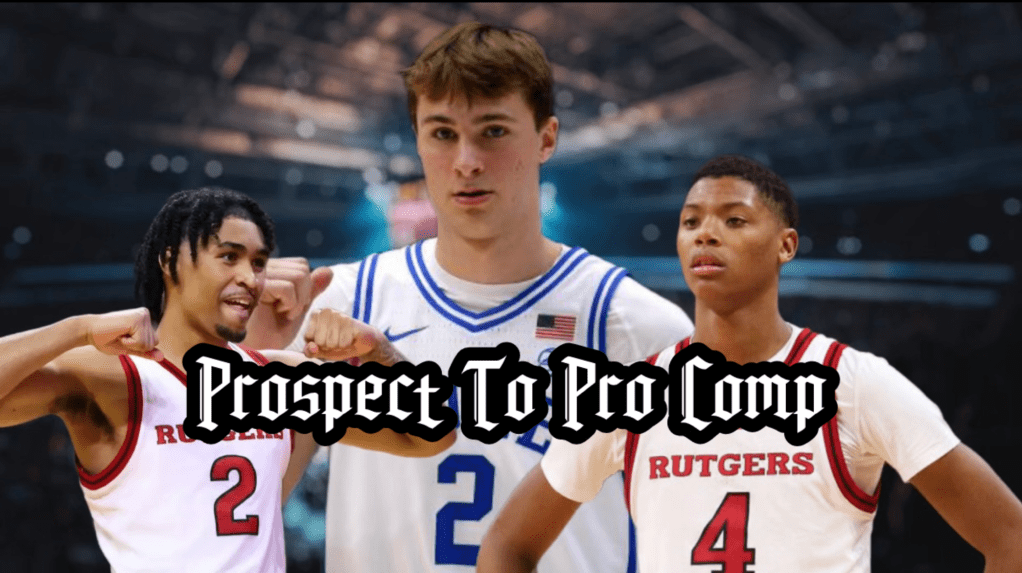
Cooper Flagg – A better shooting Jalen Johnson
Dylan Harper – A less athletic Ja Morant
Ace Bailey – A more prolific Andrew Wiggins
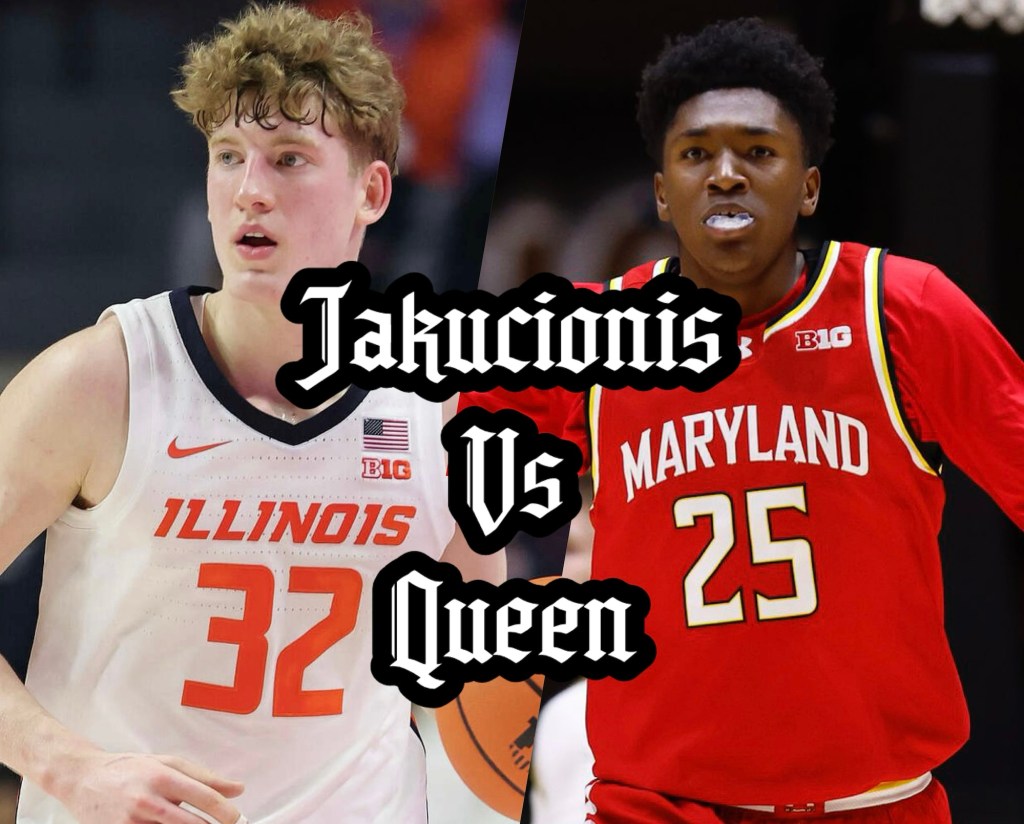
Queen and Reese dominated Illinois, winning 91-70 delivering a commanding performance, taking down Illinois in a 20-point blowout. Jakucionis and his teammates struggled from the field, but even in the face of a rough shooting night, Jakucionis’ skill set was on full display.
Before diving deeper, I have to highlight the unselfishness between Jakucionis and Queen. Jakucionis consistently set up his teammates with excellent looks, finishing the game with 7 assists—though it easily could’ve been 10 or more. His hustle on the boards also stood out; grabbing a rebound and immediately pushing the ball in transition showcased his relentless energy. Defensively, he was engaged, fighting through screens and showing plenty of effort on that end too. Despite the blowout scoreline, had Jakucionis found his shooting rhythm, this could’ve been a much more exciting game.
Jakucionis struggled from the field, going 0-4 from three-point range and missing a few shots badly, including some airballs. However, his ability to get to the basket and draw fouls was evident. He spent a lot of time at the free-throw line, finishing 11-12. Jakucionis’ final stat line—21 points, 7 rebounds, and 7 assists—reflects his overall impact on the game, though it wasn’t without flaws.
His ability to make difficult, creative passes was impressive, but it came at a cost: 7 turnovers. Jakucionis also needs to be more protective of the ball, as a few possessions saw it get poked away. While the airballs came after solid moves, he needs to work on strengthening his core to finish those shots. Overall, though, I’m excited about his potential—his energy and skill set are undeniable. With some adjustments, Jakucionis can become a real problem for opposing teams.
Derik Queen had a standout performance, finishing with 25 points and 6 rebounds. Queen’s an intriguing big man, and as I mentioned before, his passing ability is remarkable. He hit backdoor cutters, threw a beautiful touch pass to Reese, lobbed it over the top to him multiple times and showed impressive vision on outlet and bounce passes. It’s a joy to watch.
In addition to his passing, Queen’s physicality is evident. He’s a strong, powerful player who can rebound and finish around the rim. Against Illinois, he used his body to dominate in the paint, spin moves that would make Shaq say “BBQ Chicken”. His footwork on those moves are impressive.
There are still areas of concern. Queen has a nice touch around the basket and in the mid-range, but he’ll need to expand his shooting range to the three-point line if he wants to develop his offensive game at the next level. Defensively, I’m curious to see how he handles playing on the perimeter. While he contests shots and puts in effort, he doesn’t look particularly agile, which could pose challenges in pick-and-roll situations. A true test will come on defense when he faces off against Dylan Harper and Rutgers on February 9. Harper loves the pick and roll, I’ll be eyeing how it plays out.
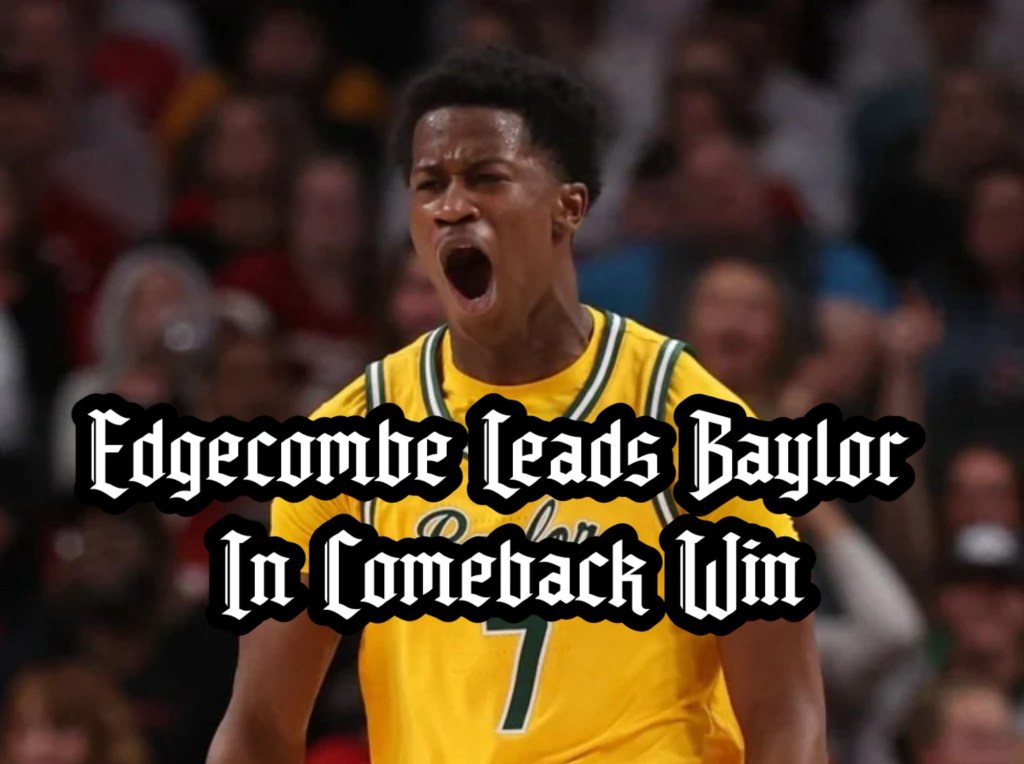
I’ve caught bits and pieces of Baylor games and glimpsed VJ Edgecombe in action, but last night, I finally got to watch the full game against Kansas State. Man, this kid is special. He was the catalyst for Baylor’s comeback, leading the team to a win with 30 points on 8-of-13 shooting and just missing one free throw, finishing 11-of-12 from the charity stripe.
Right out of the gate, VJ made his presence felt with a steal. His first shot was an airball three, and I thought, “Okay, this may not be his night.” But after that, he locked in. VJ hit a couple of threes, contested shots, intercepted a pass for another steal, and displayed unselfish ball movement. Of course, he also showed off his quickness and explosiveness driving to the basket. Despite his individual efforts, though, Baylor struggled in the first half.
In the second half, VJ took over. Credit to Coach for switching to a 1-3-1 zone, which allowed Baylor to get stops and Baylor got out in transition quickly. Down by 7 with 11 minutes left in the game, the momentum shifted. VJ is deadly in open space, and that’s what really caught my eye. He thrives on the fast break. There should have been three consecutive transition baskets for VJ. The first, he ate up the open floor and glided in for a smooth finger roll. On the second, his teammate missed the opportunity to get him the ball—I was screaming at my TV. Finally, on the third, VJ was ready to take off and soared in for a dunk. Down the stretch, Baylor leaned on him, and he delivered—whether getting to the basket, knocking down a three, hitting free throws, or setting up Celestine, he did it all.
As for his weaknesses, there was one possession where he failed to rotate into help-side position, giving up an easy dunk. Also, he doesn’t seem as confident finishing when driving left compared to when he drives right—he turned back a couple of times when attacking that direction. These are small things, though, that can be improved with time.
Overall, it was an impressive performance and a gritty win, coming from behind to secure the victory.
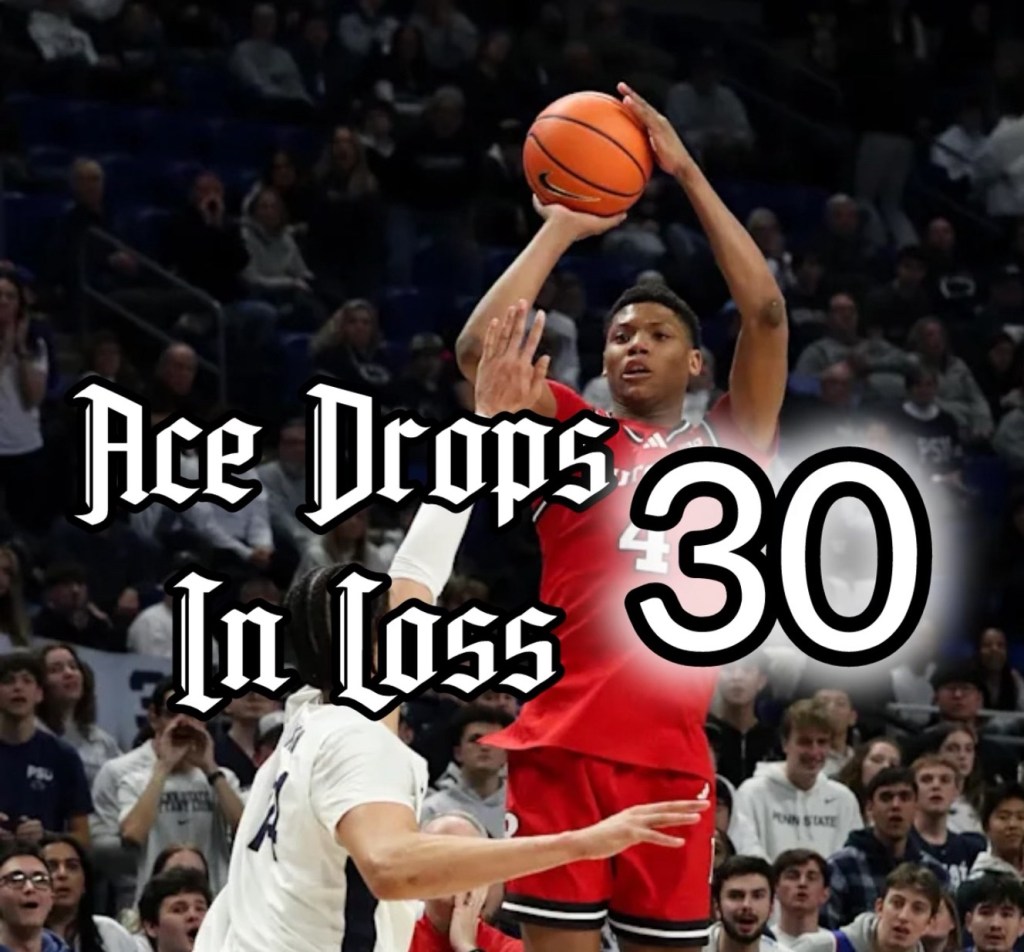
What. A. Game. This was my first time watching Penn State and I’m a fan of Penn State and their staff, I definitely enjoyed watching them play. They’re a well-coached, gritty team, and last night they took down Rutgers 80-72, which was especially impressive given Ace Bailey’s 30-point performance in the loss. I’m also expecting Dylan Harper to miss at least one game due to injury, so let’s dive into it.
Everyone will be talking about Ace’s dunk—and rightfully so—but for me, the key takeaway is efficiency. Bailey went an incredible 13-for-15 from the field, including 4-for-5 from three, for an ultra-efficient 30 points. He also grabbed 7 rebounds. But it wasn’t just his offense that impressed me—his defense was solid too. After watching him play against UCLA, I started paying extra attention to his defensive presence, and it’s clear: he’s not just an offensive juggernaut. This game really made me understand why some consider him the potential #1 pick in the upcoming NBA Draft.
Bailey was simply everywhere. His first step is lightning fast, allowing him to get to his spots with ease. Even when defenders contested his shots, he made it look effortless. On the defensive end, he rotated well, causing deflections and steals. He was actively engaged on both ends of the floor, and his ability to disrupt plays and contest shots was on full display. This is one of those games where you really need to watch him play to appreciate the full scope of his talent. Bailey was as close to perfect as you can get.
The only drawbacks from last night? At times, he can get a bit sloppy going downhill, and he had a mental lapse that led to fouling out. After a dunk in the closing seconds to cut the lead to 3, he bumped a Penn State player too hard while they were inbounding the ball, which resulted in his fifth foul. But let’s be honest—these are minor issues for an 18-year-old with limitless potential.
Dylan Harper, Bailey’s partner in crime, had a rough outing but still showed why he’s considered a top pick in the upcoming draft. My favorite play of his was a Penny Hardaway-esque turnaround jumper in the midrange. He also displayed excellent hands on defense, something I’d been watching closely after his game against UCLA. Penn State did a great job limiting Harper’s ability to get to the basket, particularly by preventing that high pick-and-roll from developing. They switched up their defenses, including using a zone, to keep Harper from getting into his rhythm.
That said, Harper did find his way to the rim a few times, showing off his decision-making skills. He also twisted his ankle in the first half, and I was surprised to see him continue playing through it. It looked like a bad roll, and honestly, I think he should’ve sat out. You love the toughness, but he wasn’t quite the same in the second half. I expect more teams to try and keep him out of the lane. To counter this, he’ll need to become more consistent as a shooter. Hopefully, the sprain is minor and he’s back on the court soon—if he misses time, it’s going to hurt Rutgers.
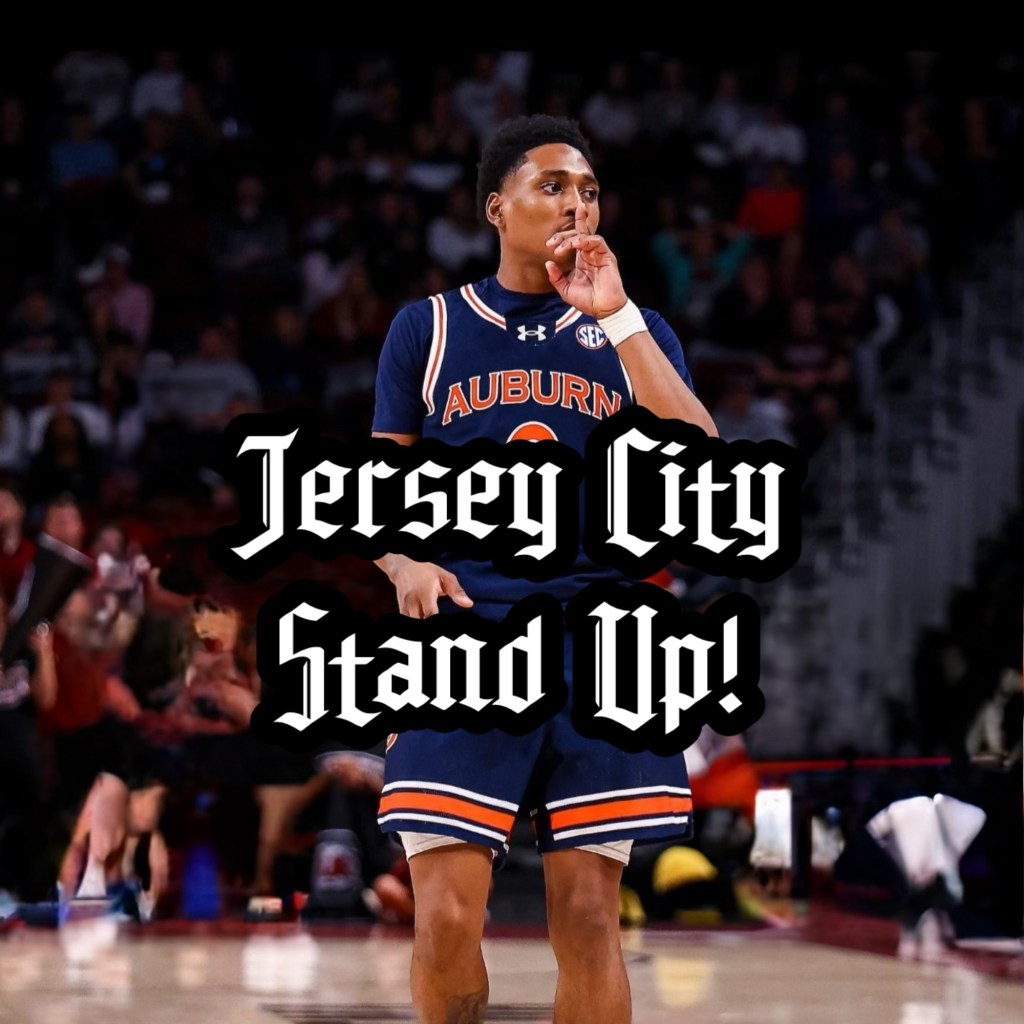
I’ve been under the weather lately, so yesterday, I planned to just relax and catch some college hoops. I tuned into the Auburn vs. Georgia game, mostly to watch Asa Newell, with no intention of writing anything. But that quickly changed when Tahaad Pettiford stepped onto the court.
This kid Pettiford is a HOOPER. Sure, you could point out that he’s undersized, but let me tell you—he’s a HOOPER. You can tell the second he walks onto the floor; Pettiford oozes confidence. Auburn just looked better with him on the floor. He closed out both halves, and it doesn’t matter if he’s coming off the bench or starting—he’s a walking bucket.
From the moment he checked in, Pettiford was knocking down threes. One shot in particular was a nasty step-back three off an escape dribble, great footwork into a smooth, confident shot. Pettiford was cooking—12 points in 6 minutes, finishing the first half with 15 and wrapping up with a career high 24 on the game. But his three-point shooting isn’t his only strength.
He was constantly making the right pass to find his teammates. Whether off a dribble handoff or pick-and-roll, Pettiford showed a great feel for the game, delivering the ball where it needed to be. He also flashed the ability to finish with both hands. One play that stood out was a right-handed floater (his off-hand), which shows the versatility in his game. Honestly, Pettiford didn’t show many weaknesses on the offensive end.
Now, he didn’t get to the rim much, and when he did, he had some struggles finishing. I’ll be watching more to see how he gets to the rim in the future. Pettiford relied heavily on his jumper, which worked well, but there’s a question of how often he’ll be able to get to the rim consistently at the next level. He did get blocked on a step-back three and had a couple of careless turnovers, but overall, I enjoyed watching him play.
As for Asa Newell, I see a big man with a lot of potential. Georgia runs a lot of action through him—he’s a strong passer and can put the ball on the floor. Newell also showed that he can knock down the three, which will catch the attention of NBA scouts. He’s got a nice hook shot in the paint, too. On offense, it seemed like he lacked some physicality, but defensively, he was much more engaged, using his body well and protecting the rim.
Newell had a tough moment late in the game when he missed a game-tying lob layup off an inbounds pass under the basket. It was a difficult attempt, so credit to him for even getting the shot off. Overall, it was an incredibly entertaining game, with Auburn coming out on top 70-68. Honestly, I wouldn’t have minded if this game had gone to overtime—that’s how enjoyable it was to watch.
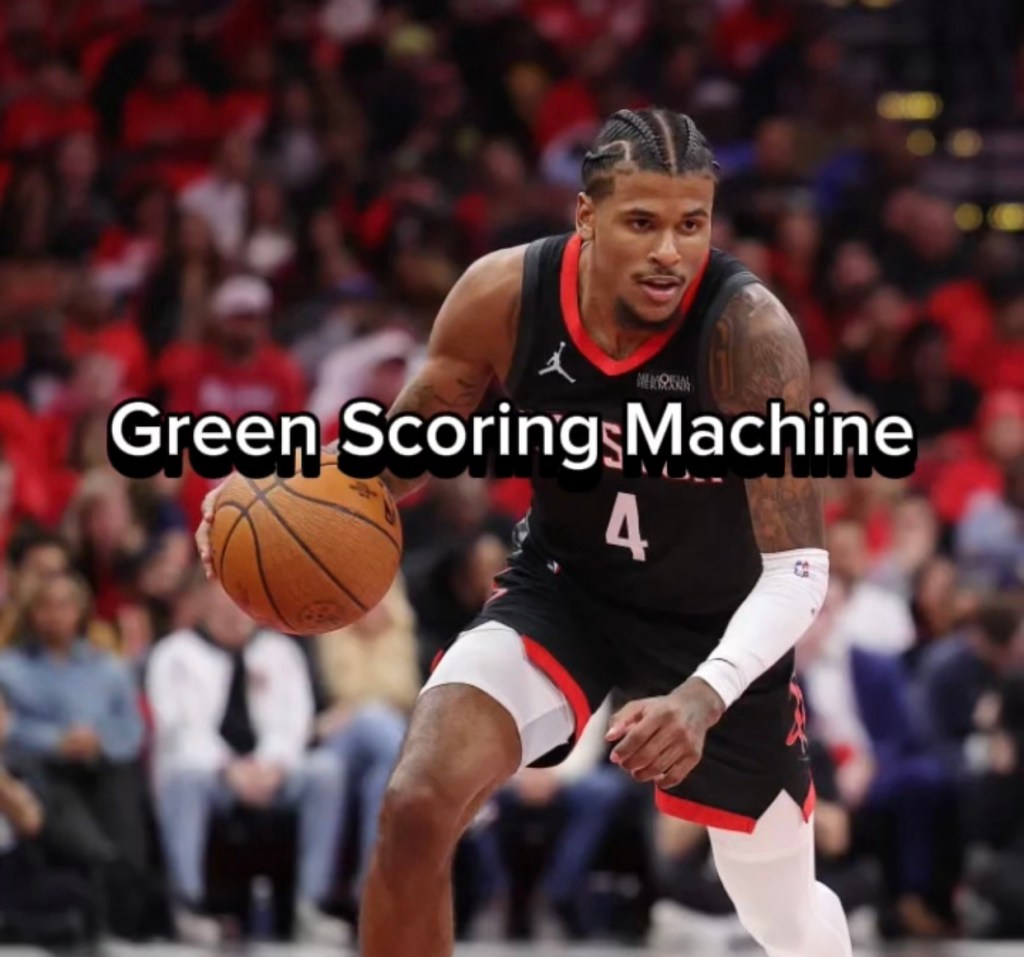
Jalen Green is on fire right now, and he is the definition of streaky. His play reminds me of one of my all-time favorite players, J.R. Smith—also streaky and an explosive athlete. Green has scored 27+ points in seven straight games, including outings of 33, 42, and 34 points. But this isn’t anything new when we talk about Jalen Green.
If you remember, last year the Rockets were making a push for a play-in spot. In March, they went on an 11-game win streak, and during that stretch, Green went on another one of his scoring binges. He had eight games of 26 points or more, including two 37-point games, and games of 34, 42, and 41 points. After that hot stretch, though, Green fizzled out.
If Jalen Green can sustain this level of play over the course of a season, he’s a bona fide superstar. In March of last year, he shot 49% from the field and 40% from three. This season, in January, he’s shooting 52% from the field and 48% from three. Can he keep it up? Probably not, because 48% from three is just absurd. But these heaters are definitely impressive.
The Rockets have also been linked to interest in a guard like De’Aaron Fox. If they pursue Fox, it’s hard to see them keeping Green, as the Kings would likely want a young talent in return. If I’m the Rockets, I’m looking to move players like VanVleet and Jabari Smith Jr. They should continue to let the core of Sengun, Thompson, Green, and Eason (if he can stay healthy) develop.
If the Rockets do end up moving VanVleet, it’ll be crucial for them to maintain their identity, with Dillon Brooks playing a key role. And kudos to Ime Udoka for transforming this Rockets team and establishing a winning culture. The reality is, the Rockets may ultimately decide to move a couple of young players—but which ones? We’ve seen teams like the Celtics and Knicks do it. The Rockets have the potential to be very good for a long time.
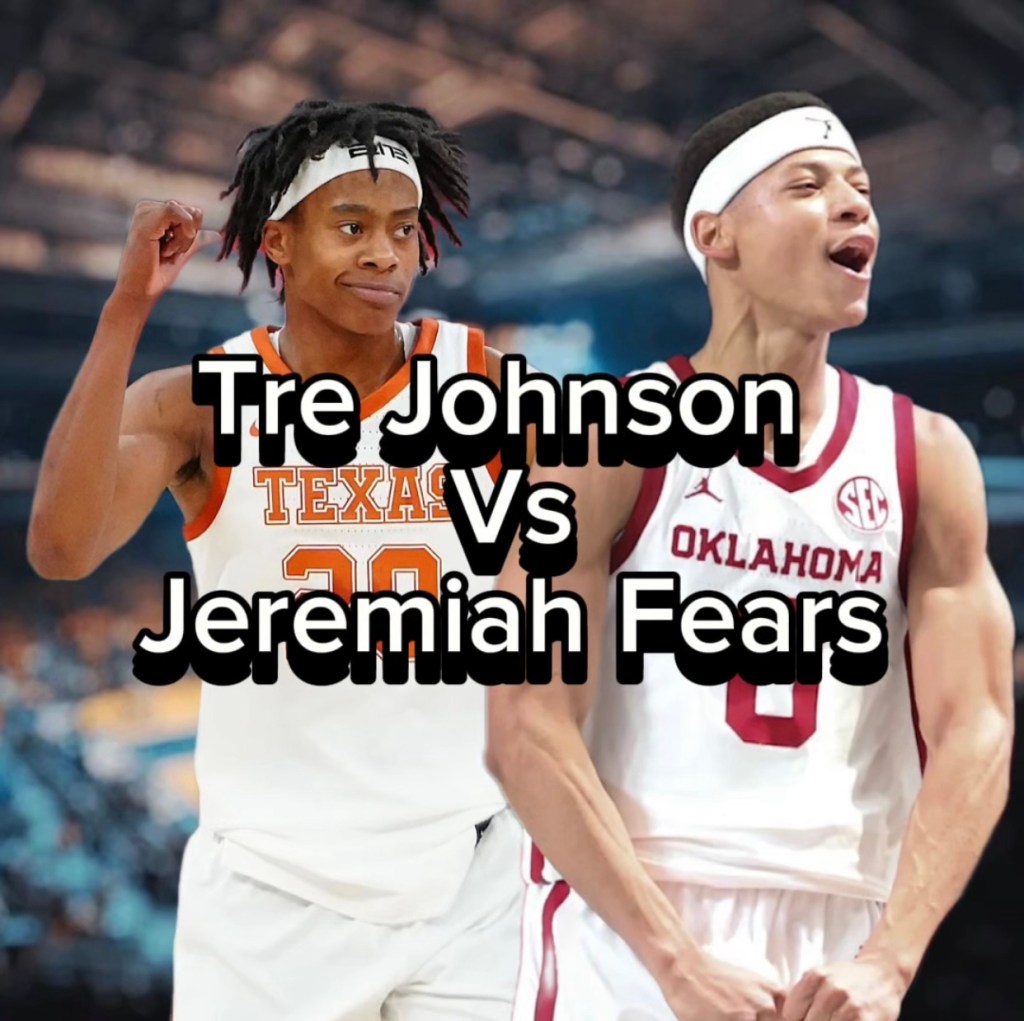
This was a wild game! Texas had a 23-point lead that was whittled down to just 2, but they managed to hang on. It was an entertaining showdown, with all eyes on Jeremiah Fears and Tre Johnson. These two players are polar opposites on the court, and it was fun to watch them go at it.
Jeremiah Fears is all about attacking the rim. He drove to the basket multiple times, and one sequence that really caught my eye was a right-handed drive that he finished with a left-handed scoop layup—a move that reminded me of Rajon Rondo’s crafty finishes at the rim. Fears is also an excellent ball handler. There was one play where he ball-faked at the three-point line, then went behind his back, leading to another drive to the basket. His mentality to attack the rim is something I really like, but I’d have liked to see him mix it up a bit more.
Fears drove to the basket almost every time, and while that’s his strength, it felt a little one-dimensional at times. There was only one mid-range pull-up that I saw, and it came off a tough turnaround jumper that resulted in a foul. Fears did a good job drawing fouls, but he struggled to convert at the free-throw line during this game.
In terms of his overall game, I felt there were moments when he didn’t show enough urgency, especially on loose balls. There were a couple of instances where he could have grabbed a rebound, but didn’t, which led to extra opportunities for Texas. However, credit where it’s due—Fears was huge for Oklahoma late in the game, hitting a crucial three-pointer with under a minute left and then coming up with a steal to cut the lead to just 2.
Tre Johnson, on the other hand, was the main reason Texas was able to hold onto the lead. He was everywhere and displayed an impressive offensive game. Johnson has incredible range and isn’t shy about using it. He also loves using his floater and is definitely a two-level scorer. Two threes in the first half stood out: one was an impressive side-step three, and the other came from well beyond the arc. What was interesting, though, is that Johnson didn’t get to the basket much.
His game is centered on the three-point shot and mid-range, which is great, but not getting to the rim does raise some questions. One thing I noticed is that Johnson’s handle is a bit shaky. When he drives, it feels like he’s carrying the ball, and his dribble doesn’t seem very strong. This made me wonder if he might be avoiding contact when driving to the basket.
In the second half, Johnson did show he could get to the rim with a ridiculous left-handed layup that was impressive to see. When Oklahoma started to close the gap, Texas turned to Johnson, and he delivered. He hit two consecutive fadeaway jump shots to put Texas back up by 7, which was crucial as Texas fought to hold off Oklahoma’s surge.
All in all, this was an exciting game, and watching these two projected lottery picks go head-to-head was a real treat. Fears brought the aggression, while Johnson showed why he’s such a dangerous scorer.
Key Takeaways:
Fears Pros: Loves attacking the rim and is a great ball handler.
Fears Cons: His game can be one-dimensional at times, and he lacks aggression on loose balls.
Johnson Pros: Has deep range and is an impressive two-level scorer, always around the ball.
Johnson Cons: His dribble can be shaky, sometimes looking like he’s carrying the ball, and he doesn’t get to the rim enough.
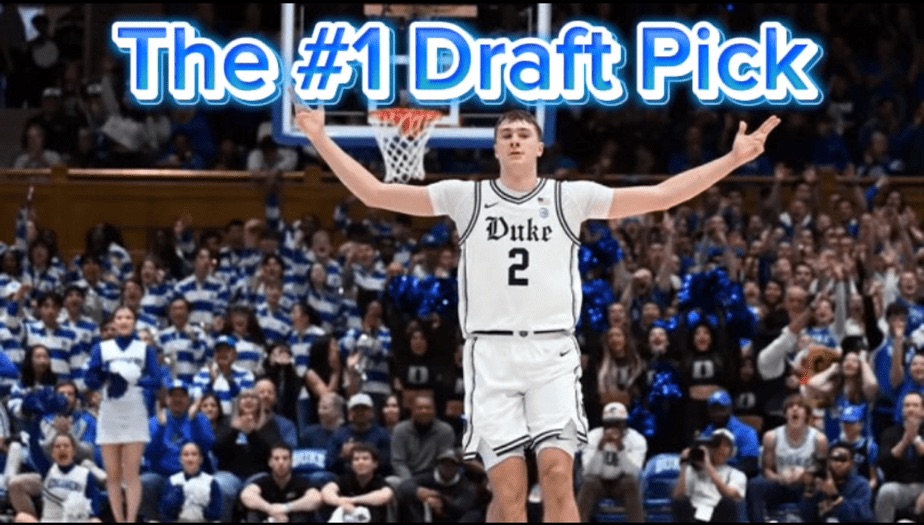
Duke wins its 11th straight game following a 42-point performance by Cooper Flagg. You know I had to tune in for Duke vs. Miami to see how Flagg would follow up, and let me sum it up in one word: Control.
Cooper Flagg dominated this game from start to finish. He can do it all, and personally, I didn’t see a single flaw in his game. From the opening tip, he showcased his defensive IQ with a timely help-side steal. Both his defensive and offensive awareness were on full display throughout the night. If you look at the box score, you’ll see a solid stat line—13 points, 7 rebounds, and 6 assists—but those numbers don’t do his performance justice.
Yes, he had 6 turnovers, but it felt like he made the right decision on nearly every possession. He was extremely unselfish, finding the hot hand of Knueppel, who couldn’t miss from beyond the arc. Flagg also took some great shots that just wouldn’t fall, with several in-and-out bounces. I also loved how he took on the challenge of guarding Kidd, Miami’s only real bright spot.
Flagg is the undisputed No. 1 overall pick in this upcoming draft.
There were some debates about whether it’s Flagg or Bailey, but it’s not even a question—it’s Flagg. With his skill set, I see him blossoming into a star at the NBA level. If I had one critique, it would be for Flagg to tighten up his handle a bit. I’m really excited to see how players like him, Harper, and the rest of this draft class transition to the NBA.
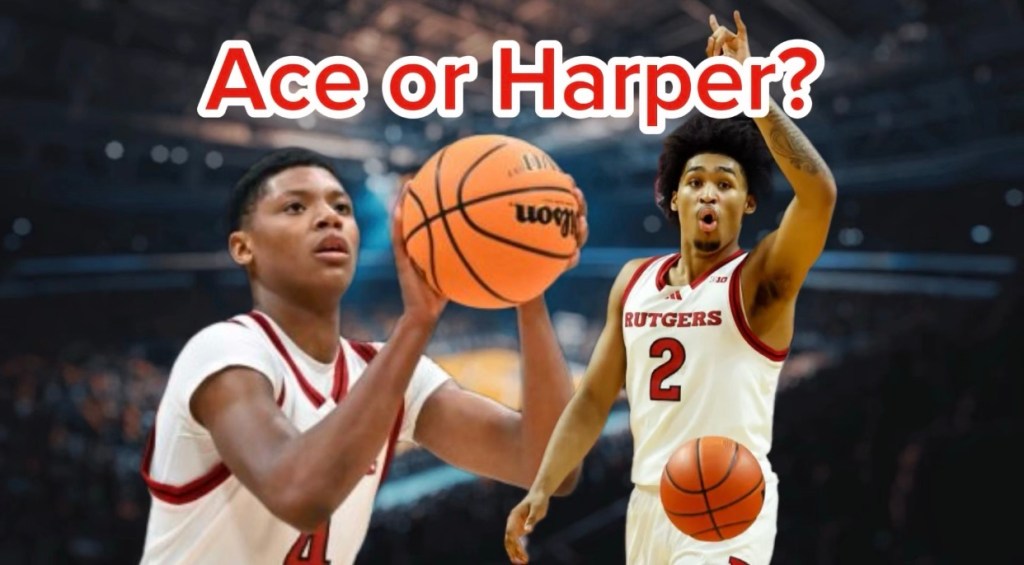
Shoutout to Sebastian Mack, who fought until the final buzzer, making plays on both ends and keeping UCLA in the game. Despite his efforts, Rutgers came away with the win, 75-68. Now, let’s dive into Dylan Harper and Ace Bailey.
First off, let me say this: Dylan Harper is ready to make an immediate impact in the NBA. This was my first time watching a Rutgers game (I know, shame on me), and I’m already planning to see Harper and Bailey live in action. Harper is a player who could start as a point guard in the NBA tomorrow.
One attribute that immediately stands out is how well Harper splits defenders off the high pick-and-roll. Watching him carve through defenders repeatedly reminded me of Ja Morant. Now, I’m not suggesting Harper is on Morant’s level athletically, but his ability to break down defenses is impressive. Beyond that, Harper makes smart decisions with the ball—finding teammates cutting baseline, and even tossing a lob to Ace Bailey off the high pick-and-roll. There were areas where he could improve, but it’s important to remember this was my first time seeing these young players in action.
While it’s not a glaring issue, I didn’t see much of a midrange game from Harper. Most of his offense came from attacking the rim or passing off the pick-and-roll. He could certainly benefit from developing a Jalen Brunson-esque midrange game—though, perhaps it’s something he’s still refining. His free throw shooting (74%) could use some work, and he strikes me as a streaky three-point shooter. For example, when the defense expected him to drive, he pulled up for a three and drained it. He then knocked down another in transition for back-to-back threes. That said, his shooting touch wasn’t as consistent throughout the game. But with Harper coming back from injury, it’s possible he’s just shaking off some rust. If this is him rusty, I can only imagine how good he’ll be when fully healthy.
Now, Ace Bailey exudes confidence and athleticism. He finished with 20 points and 10 rebounds, but if you were watching the game, you wouldn’t have guessed he had those numbers. What stood out to me was his approach—particularly his love for the jab step. And honestly, I’m all for it. He uses the jab step to set up virtually everything he does against defenders. While his shooting wasn’t on fire, you could see the confidence in his stroke. The kid’s athleticism is off the charts. Two plays stand out: one was a help-side block where his head was nearly at the rim, and the other was a lob from Harper as Bailey cut baseline.
If there’s one thing I’d say about Bailey, it’s that he’ll need to add some muscle, which the NBA will definitely help with. At the end of the day, we’re talking about two 18-year-olds here. Right now, I see Harper as the more NBA-ready player. He’s a strong guard with high basketball IQ and playmaking skills, and he could thrive in an NBA system that emphasizes spacing. Both Harper and Bailey have areas to improve—Harper’s shooting and Bailey’s strength being the most obvious—but they both could stand to be more tenacious defensively.
This is just my initial assessment from one game. I’ll continue to watch them and make adjustments as they develop.
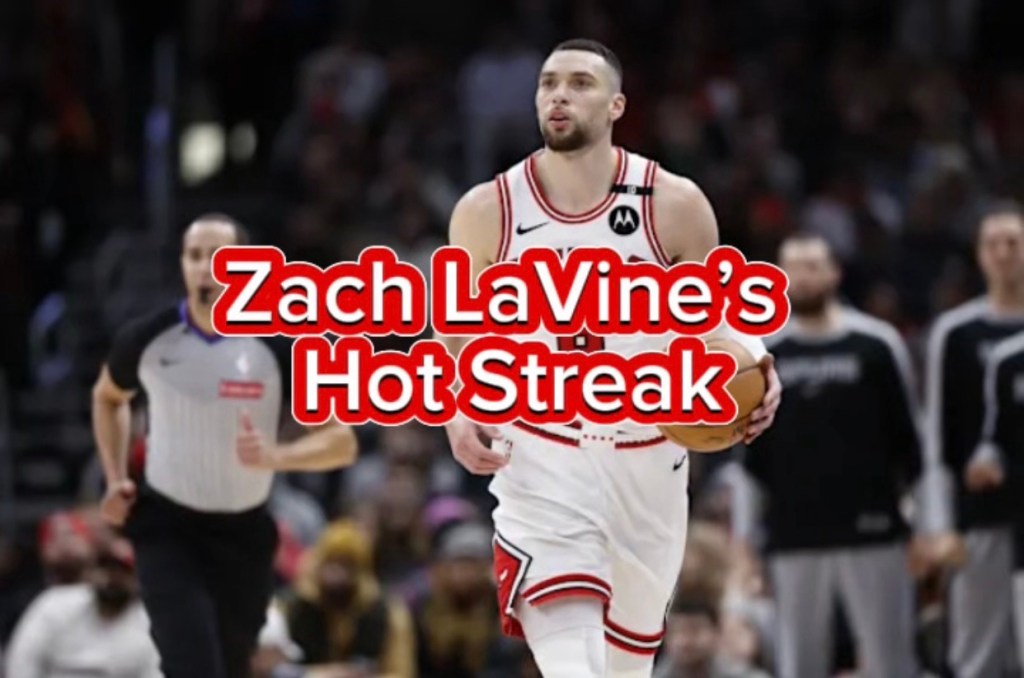
If you haven’t been paying attention, Zach LaVine has been on a tear since the start of the new year. Since January 1st, he’s scored 30+ points in six straight games, including tonight’s performance: a 36-point, 10-rebound double-double, his second of the month. There have always been whispers questioning whether he’s worth his contract, but I believe he absolutely is. The Bulls are currently 10th in the East, and a Bulls rebuild anticipated, the question is: will LaVine be on the move? Personally, I think he should be.
One team that could make sense for LaVine is the Denver Nuggets. The Nuggets are clearly in need of another dynamic scorer, and rumors suggest they might be open to moving a young piece—Michael Porter Jr. This could be the perfect situation for both a rebuilding Bulls team and a Nuggets squad in search of another championship.
A potential trade package could look like this: Michael Porter Jr., Dario Saric, and two first-round picks in exchange for LaVine. The Bulls would get a young sharpshooter in Porter along with valuable draft capital, while the Nuggets would land a polished, three-level scorer in LaVine. In a stacked Western Conference, Denver needs another creator, and LaVine fits that bill. The only real question is how LaVine would adjust to playing with the ball in his hands less.
If the Nuggets do pull off this deal, they become a much more dangerous contender. Nikola Jokić is having yet another MVP-caliber season, but beyond him and Jamal Murray, who else can they rely on? LaVine could be the missing piece to help Denver get back to the Larry O’Brien Trophy.
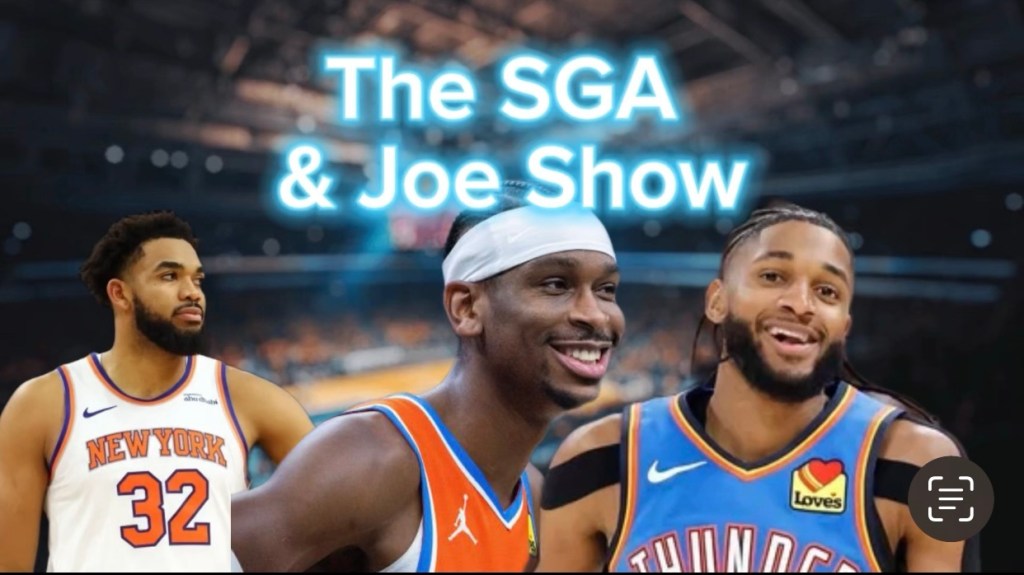
This was one of the worst performances I’ve ever witnessed. The Knicks got absolutely destroyed by a short-handed Thunder team. You’d think they’d come out with something to prove, out for revenge—but it was the complete opposite. There was no energy, no life on the court—just flat and lifeless.
The only player who showed up was Josh Hart, but honestly, that’s nothing new. We know Hart’s going to fight until the very end. He had a standout moment with a steal on SGA, but of course, didn’t get the foul call on the other end. Every other Knick had an off night, which happens from time to time, but the coaching staff didn’t do any favors either, especially in terms of getting KAT involved.
For most of the game, OKC played small on KAT and doubled with Isaiah Hartenstein. I kept screaming at my TV for KAT to go quick, especially after a couple of turnovers when he was trying to survey the floor. It felt like a lack of offensive scheme combined with KAT not being aggressive enough. As the game wore on, KAT started to find his rhythm, putting up 13 in the third, but by then, it was too late. The Thunder had built up a sizable lead and maintained it. KAT should’ve been more aggressive, particularly when he had the chance to shoot over his right shoulder—something he can definitely do. Also, I still don’t understand why his first three-pointer didn’t come until the third quarter. Yes, OKC clearly tried to take that shot away, but as an NBA head coach, it’s your job to get your guys the looks they need to succeed.
Simply put, Thibs got outcoached last night. I didn’t see any adjustments whatsoever. Of course, it doesn’t help when Mikal and OG go a combined 0-12 from three, and Brunson wasn’t his usual self. Without defensive intensity, it was a recipe for disaster. The final score—a 25-point loss—said it all.
On the OKC side, SGA and Isaiah Joe had a field day. As a team, OKC shot 10-15 from three in the first half, compared to the Knicks’ 2-15. That’s a clear sign that it just wasn’t the Knicks’ night. Joe was responsible for eight threes on 11 attempts, finishing with 31 points in just 29 minutes. SGA dropped 39 on 15-21 shooting, and not once did the Knicks double-team him. The pick-and-roll defense was non-existent, and playing drop coverage against SGA was a disaster—he was able to feast in the mid-range and play his game.
It was a tough game to watch, to say the least. Sure, it’s just one game, but this is not the kind of performance you want to see from a team that’s supposed to contend, especially against a team that’s viewed as a potential powerhouse out of the West. There were definitely red flags from last night, but maybe it’s a wake-up call for the Knicks to tighten things up. The bottom line: you have to bring it every single night. Hats off to Josh Hart, though—he was the one bright spot, as he always is.
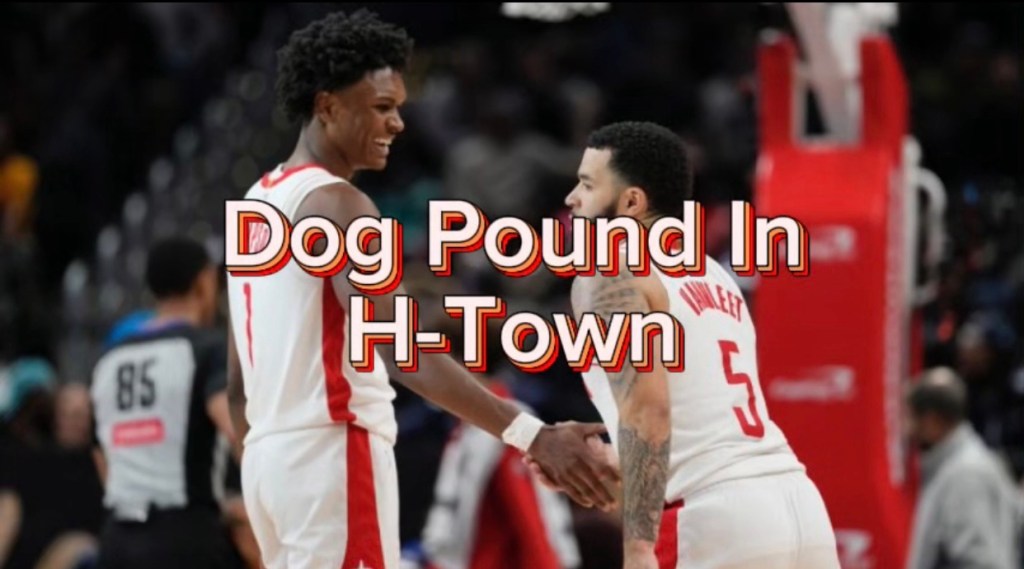
Last year, I predicted the Rockets would make the playoffs. Unfortunately, they fell short. But this year? They’re a lock. I just pulled the trigger a year early. So, how big of a threat are the Rockets in the West?
First and foremost, Ime Udoka deserves his flowers. He’s brought in veteran DOGS to lead a team full of young dogs! Say what you will about Dillon Brooks, but he brings a competitive fire that any team could benefit from. Fred VanVleet has always played with a chip on his shoulder, and his championship pedigree is exactly what this young Rockets squad needs.
The Rockets are the Magic of the West. Both teams are in a similar position, but here’s the difference: the West is stacked. As a result, the Rockets will likely face tougher playoff competition, and a first-round exit is a real possibility. But the silver lining? These young dogs will get invaluable playoff experience. I’m all in on this team and the job Udoka’s done.
With all this young talent, it’s going to be fascinating to see how they handle their winning aspirations. Will they continue to build with the current roster, adding pieces through free agency? There’s been buzz around a potential trade for a star like De’Aaron Fox.
Personally, I’d love to see this group keep building together. Even though they’re sitting pretty at second in the West and snagged a solid win against Memphis last night, they’re still going to need more star power to make a deep run.
Both teams entered this matchup on impressive winning streaks. The Cavs extended theirs to 11 games, handing the Thunder their first loss in 16 games. At this point, it’s fair to say the Cavs are firmly in the contender conversation. Let’s break down some key takeaways from last night’s game.
Jarrett Allen and Evan Mobley were both dominant. Each recorded a double-double, with Allen posting 25 points and 11 rebounds (7 offensive boards), while Mobley added 21 points and 10 rebounds. The Thunder were notably short-handed upfront, missing Chet Holmgren, which likely contributed to the Cavs’ strong inside presence. The Cavs also got solid contributions from their bench.
Ty Jerome and Max Strus were both efficient, going 6-for-7 from the field—Strus hitting five of those six shots from beyond the arc. However, the Thunder were also missing a key bench player, Alex Caruso, which is a notable absence. It would’ve been interesting to see how the game would’ve played out with both teams at full strength.
Now, I’m not trying to rain on the Cavs’ potential playoff run, but I’m in a “I’ll believe it when I see it” camp. Last night’s game was close—just a two-possession difference for most of the night—and that’s with the Thunder missing two key players. As much as I respect the Cavs, I still have them ranked 3rd in the East behind the Celtics (1st) and Knicks (2nd). And just a side note: a fully healthy Magic team would likely leapfrog the Cavs into that third spot in the East.
Is it all doom and gloom in Miami? Of course not. Tyler Herro has been ballin tf out. Bam is one of the most versatile bigs in the league. Haywood Highsmith is cementing himself as a lockdown defender. Lastly, they have young talent that they can develop, Jaquez, Jovic, Ware, Dru Smith and Larsson. This season and next season is a wash and that’s ok.
In the 26-27 season they’ll only have 5 guys under contract, Adebayo, Herro, Ware, Jaquez and Larsson. Butler should be traded to whichever team offers the most intriguing picks. Duncan Robinson and Terry Rozier will come off their books, maybe they try and package guys like these 2 for more picks before they are dumped. It’s going to be interesting to see who Pat Riley keeps on this roster.
I personally would definitely bring back Highsmith and Dru Smith. Use the excess money to fill in the rest of the roster on short term deals. In 26 there will be more attractive free agents and Miami isn’t a hard sell. It will be a combination of drafting and signing as it always is. Developing young talent into great players. How far can a core of Herro and Bam get you? I believe Herro and Bam are the 2nd and 3rd options on a championship team. Who will be their number 1? How will the rest of the roster develop? How these questions are answered will determine the type of competition Miami will be in the future.
If you havent checked the standings lately, the Memphis Gizzlies are 3rd in the West, 10 spots up from last year. This is due largely to the return of Ja Morant. Ja has played in 20 games this season and the Grizzlies are 14-6 when he’s in the lineup. When Ja isn’t playing the Grizzles are 10-11, I think many have forgotten how talented Ja is. It amazes me how much attention Ja got when he was doing bad, where’s the praise now?
How can we forget the slip ups Ja had. The tendency to flash guns were concerning and those issues have been resolved. There should be just as much attention for his actions on the court. Not to mention the fact that Ja has been keeping himself out of trouble. I’ve been rooting for this young man and I’m happy to see him back. Right now he’s dealing with a shoulder injury, but hopefully he can get back to helping his team sooner than later.
Coming into this season I had Ja Morant ranked number 9 out of 10. Most people were confused on why I had him ranked in my top 10. I believe now you can see why. Ja’s one of those rare difference makers. In a stacked Western conference they’re in the 3 seed. Are they a true contender? Yes, as long as Ja is healthy. The Grizzlies have depth and 2 other stars aside from Ja Morant (Jaren Jackson Jr. and Desmond Bane). It is EVIDENT Ja Morant is the key to the engine in Memphis.

Many believe this will be the Finals matchup including myself. Last night’s showing wasn’t the prettiest sight. OKC was trailing most of the way, but turned their defense up in the 2nd half which led to them getting the win. There are a few takeaways from this game.
The Celtics shot the 3 horribly, going 9-46 which is 19.6%, this kind of shooting performance is a rarity. I don’t want to discredit the Thunder’s defense, but it was a combination of Thunder defense and some shots that just weren’t falling. We all understand that’s what you sign up for when your philosophy is to live and die by the 3 like so many teams do. Any other night I believe the Celtics would have gotten this win.
Concerns for the Thunder, JDub had an off game and I have been skeptical of JDub as the second option for this team. Strictly when it comes to playoffs and more specifically the finals can JDub be that robin SGA needs. SGA did his thing scoring 33 pts, 11 rebs and 6 assts. The Thunder got a nice contribution from Aaron Wiggins (15 points off the bench), but will you he be able to do that consistently in a 7 game series. Keep in mind Alex Caruso and Chet Holgrem were also out for this game. We also know the Thunder get the job done by committee and playing team basketball. We should be confident in the Thunder after this win right?
I believe this was more of a Celtic poor performance than a convincing Thunder win. I’m not saying the Thunder can’t win a 7 game series against the Celtics, but I still think they need Jimmy Butler. Yes it’s clear I’m a huge fan of the guy, but this could be OKC’s perfect opportunity to land him and win a championship. If I was apart of the Thunder’s FO I’m calling Pat Riley, offering Kenrich Williams, Ousmane Dieng and the draft picks included would be negotiable. By doing this the Thunder would put themselves in the 2nd apron of the NBA’s salary cap. That’s fine, they’re trying to win a championship. Would Pat Riley accept this type of offer? From what it sounds like he isn’t getting any offers that are intriguing. The Thunder need to really cement their chances and get Butler by holding picks over Riley’s head.
Why Butler? I don’t believe this needs to be discussed. All basketball fans know what Jimmy does in the playoffs. We have seen it year in and year out. Put Butler on a loaded Thunder team there is no doubt in my mind they win it all. Butler is a veteran with playoff and finals experience, an absolute dog, one of the fiercest competitors in the NBA, plays hard defense like the rest of the Thunder. Lastly, it gives the Thunder another certified shot creator and bucket getter. Go get Butler and win a championship.
Before I get into why Cade Cunningham is deserving of an All-Star slot this year, I want to give a huge shout out to J.B. Bickerstaff. I didn’t understand why the Cavs let him go even though the Cavs are having an outstanding season without him. No shade towards Kenny Atkinson. Kenny Atkinson did a marvelous job when he was head coach of the Nets. I have love for both of these coaches, but when the Pistons hired J.B. I said this is the perfect man for the job. Now that I got that out of the way, Cade needs more exposure!
Last night Cade and Anthony Edwards dueled it out. Mainstream platforms highlighting Ant-Man’s career high 53 pt game (10-15 from 3). Meanwhile the Wolves LOST. To top it off Cade dropped a cool 40 piece along 9 assts and 6 rebs on 51% shooting. Cade Cunningham is averaging 24 pts, 7 rebs and 9.5 assts ths season. We’re talking about near triple-double numbers. The Detroit Pistons were last in the East last year totaling 14 wins. This season they already have 17 wins, they’ve also added veteran pieces to help their young core be competitive. The Pistons additions have allowed Cade’s game to grow and also showcase the talent he possesses. Is Cade an All-star? Undoubtedly.
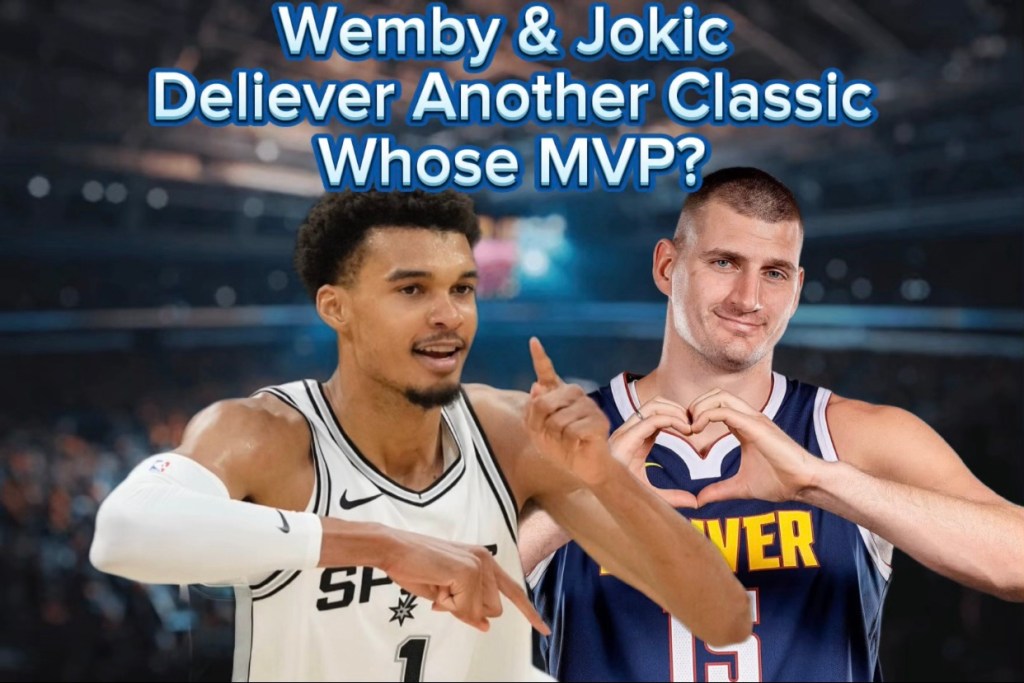
Wemby and the Joker delivered another classic last night. Trading blows, teammates making big shots down to the wire. Both putting up huge statlines, Wemby (35 pts, 18 rebs, 4-6 from 3), Jokic (41 pts, 18 rebs, 9 assts). The Spurs came out with a 113-110 win due to Wemby’s phenomenal defense causing Jokic to turn the ball over allowing the Spurs to go up 3 with seconds left.
I have said countless times Victor Wembanyama is the face of the NBA when Lebron retires. My personal opinion Wemby already is. At 7’3 Wemby handles the ball like a guard, shoots the ball from the logo and playa tremendous defense, making him must watch TV every time he touches the floor. We haven’t seen fluidity like this before. When it comes to height and fluidity there are only 2 players that come to mind – KD and Victor Wembanyama. Coming into this season I had him as my MVP, I might’ve jumped the gun a year early. The award should go to SGA. SGA DESERVES IT. Things can get interesting if the Spurs end up top 3 in the West. That would improve Wemby’s MVP chances drastically.
You can’t say MVP and not talk about the former 3 time award winning Nikola Jokic. I know the joke about the joker is he doesn’t care about basketball lol, but realistically he just handles his business and goes home. No flashiness, no shenanigans, just do what needs to be done, which is everything. Passing, scoring, rebounding, the Joker dominates. Jokic isn’t the best defensively, but he makes up for it in all other categories. I will say Jokic and Wemby have high IQs when it comes to the game. Jokic is also on pace for another MVP season which will be his 3rd straight season winning the award.
My top 3 MVP award candidates are SGA, Wemby and Jokic. If the NBA decides to give the award to Jokic again then LeBron James deserves 80 MVP awards lol. Seriously, at this point I don’t believe Jokic should be receiving his 3rd straight MVP award. I’m not hating on Jokic, it’s more so SGA being the best player on the best team. Wemby surging the Spurs to top 3 will solidify his MVP position.
Watching 2 of the best players go at it last night was one of the most enjoyable games of the season. Too bad the game was only available on NBA league pass which the NBA should fix. One former MVP winner and a future multi-MVP award winner. The Joker vs. Wemby is must watch TV and you should tune in to watch these players battle.
Happy Birthday to future Hall of Famer Victor Wembanyama! He’s only 21 years young ladies and gentlemen.
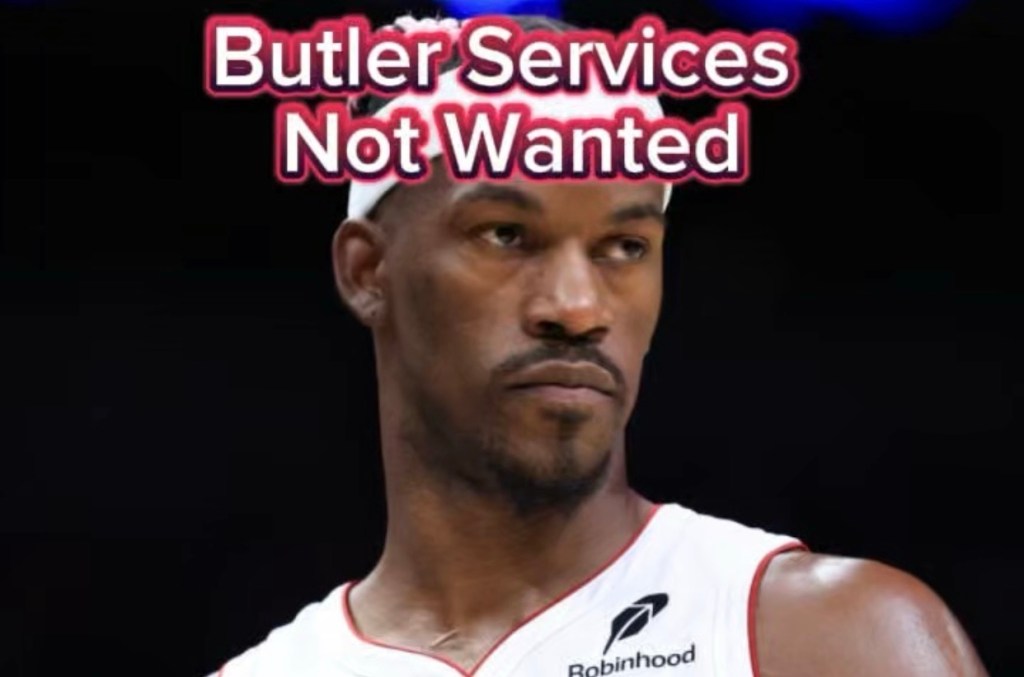
Listen. I don’t think anyone believed Pat Riley when he came out and said the Heat are not trading Jimmy Butler, I for sure didn’t believe it. If you did happen to believe him I could understand why. Why would you trade a player who absolutely dominates during the playoffs?
Every true NBA fan knows Jimmy Butler does not care AT ALL about the regular season. We can also say that any team Jimmy Butler suits up for is a championship contender. Has he gotten to the promised land yet? No. Has he shown the ability to carry a team and crush opponents in the playoffs? Yes. We all know him as Jimmy Buckets when it’s playoff time. Let’s not forget, Tyler Herro didn’t play against Denver in the 22-23 NBA Finals. What help has Jimmy had outside of Bam and Caleb Martin? To me I don’t believe the championship window in Miami is closed, but Jimmy Butler is slamming it shut.
It’s clear as day Jimmy doesn’t want to be in Miami anymore. Possibly he wanted an extension and we know Pat Riley isn’t gonna do that. Look at the way Riley treated D-Wade towards the end of his career, but you know the saying “it’s not personal, it’s business”. If you ask me, it’s always personal. Maybe Jimmy was expecting the front office to make some moves especially after the Rozier trade has not improved their roster at all. Let me also be clear, Pat Riley is one of the best GMs ever. I’m sure the reasoning on why Jimmy wants out will come out in the future as it always does, but where does he end up?
One team I always talk about when it comes to trading for a superstar is OKC. How can you not bring them up with all the picks they’ve collected. It’s the perfect situation for a player who wants to win now. The Thunder tried to use Gordon Hayward as a rental, but that didn’t work out. If we look at Jimmy Butler in that same light, It is a perfect position for him and OKC. Not only does he fit their team DNA, Jimmy will bring playoff experience to a young OKC team that needs it. The beauty of this deal is if it doesn’t work out Jimmy comes off their books at the end of next season. They will have 2 cracks at winning a championship. I would love to see Jimmy Butler win a ring. If he lands on the Thunder roster they are my favorites to win it all.
One of my favorite moments in Knicks history is when the Knicks traded for Josh Hart. I been a Knicks fan since 1999 and a Josh Hart fan since he was a youngin’ on the Lakers. I’ve watched JHart go from team to team absolutely mind boggled. Players who have a motor stand out while you watch them on your TV screen. The guy is EVERYWHERE doing EVERYTHING. A true embodiment of New York City.
The Knicks won their 9th straight game and Josh Hart recorded back to back triple doubles. I’m not surprised that Josh Hart is having this type of success it’s what I expected since the moment we traded for him. Knick fans absolutely hated the trade and that to me just showed they didn’t know what we were getting. Now my question is, can you imagine this Knick team without him?
Shout out to Josh Hart! I absolutely love watching this guy play. Also I been on him to get in the gym with me so we can get that 3p% up(one day). This season he’s shooting 38.8% from 3, 7.8% up from last season’s 31%. Salute to Josh Hart!
It’s safe to say Bryce James will be a one and done player for Arizona. Similarly to Bronny I foresee Bryce becoming a 3&D guy in the NBA. I’m not here to argue wether or not Bronny deserves to be in the league or if Bryce does when he get’s to the NBA. I do believe Bryce will ultimately end up a Laker. With the proper development I envision Bronny and Bryce being pivotal role players on championship/contender teams.
The bigger story here is LeBron James will be the first player in NBA history to play alongside both of his sons. Hate it or love it that is something we will never see again. I personally love it. Hate him or love him, LeBron James’s legacy is one that no one will be able to touch. At 40 years young the man continues to be a wrecking ball in the NBA.
Putting expectations on his sons to do the same is unfair. My expectations are for them to be serviceable players. That is fair and doable from what I have seen and watched. Wishing the best of luck to Bryce and Bronny James.

Last night had to be one of the worst shooting performances in NBA history. All you have to do is look at the Bulls v Hornets box score. Coby White shot 1-11 from 3. Josh Giddey shot 1-9 from 3. Miles Bridges shot 2-13 from 3. Vasilije Micic shot 1-13 from the field, 1-8 from 3. In total that comes out to 10%. Believe it or not, there were more of these types of performances last night.
Looking around the league we can add a few more names to this list. Bilal Coulibaly shot 1-10 from the field, 0-4 from 3. Justin Champagnie shot 1-8 from the field, 1-6 from 3. Draymond Green shot 1-10 from the field 0-2 from 3. Buddy Heild went 1-8, 0-3 from 3. Finally, Shaedon Sharpe shot 1-8 from 3. I could continue because there were MORE poor performances like Jalen Brunson and Mikal Bridges both going 1-6 from 3, but I encourage you all to check out the box scores for yourselves. In total a disgusting 13%. And of course I have Coby White, Bilal and Draymond on my fantasy categories team. Great way to start the week lol.
ON A BRIGHTER NOTE. Russell Westbrook went 7-7 from the field AND recorded a triple-double(16 pts, 10 rebs, 10 assts). So much for calling him Russell Westbr…anyway, shout out to Russell Westbrook for continuing to play ball and being a valuable vet to a Nuggets team that needs it. Also Mark Williams went 9-9 from the field recording a 20 pt, 12 rebs double-double. Walker Kessler also went a perfect 6-6 from the field recording a double-double (12 pts, 13 rebs).
Describing this as a breakout season would be an understatement. In his second season in the league, Victor Wembanyama possesses the potential to win the MVP award. The level of hype surrounding a player has not been witnessed since LeBron James. While we may never see another athlete confront expectations as LeBron did, Wembanyama is the closest to facing those pressures.
In his rookie year, Wembanyama averaged impressive statistics: 21.4 points, 10.6 rebounds, 3.9 assists, and 3.6 blocks, all while playing limited minutes—29.7 per game. This season, I anticipate Coach Popovich will allow Wembanyama significantly more playing time. My statistical expectations for him are approximately 28 points, 12 rebounds, 5 assists, and 5 blocks in 36 minutes of play. His inaugural year served merely as an introduction to the league, with year two poised to be his breakthrough. I do not foresee any sophomore slump. The caliber of talent Wembanyama possesses is truly generational, and his unprecedented fluidity at 7’3″ is a remarkable gift.
The addition of Chris Paul should benefit not only Wembanyama but the entire young San Antonio team. As a seasoned veteran with a true point guard’s instinct, Paul will facilitate easier scoring opportunities for the young phenom. Beyond mere statistics, leading his team to the playoffs this year would significantly bolster his MVP candidacy, reminiscent of LeBron in 2005-06. It is only a matter of time before Victor Wembanyama is crowned MVP. Will he also secure the Defensive Player of the Year award and achieve a quadruple-double this season? Only time will tell. I am simply grateful to WITNESS greatness once more.
 bloodsweattears.org